
RFID:building a "Smart Defense Line" for Military Reserve Material Management
author: admin
2025-10-20
RFID:building a "Smart Defense Line" for Military Reserve Material Management
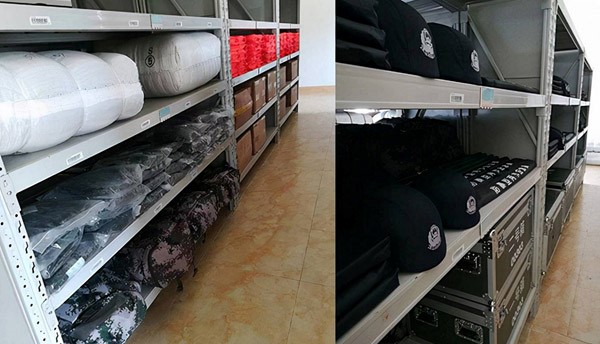
Military reserve material management requires real-time performance, accuracy, and anti-interference capability. RFID technology, with its advantages of non-contact identification and simultaneous multi-tag reading, has become a core solution. Different types of RFID tags have clear roles in this scenario, forming a full-link management system.
Harsh-environment-resistant RFID UHF stickers are the core of large-scale equipment management. These tags are high-temperature resistant, anti-electromagnetic interference, and corrosion-proof. They can be directly attached to the surface of equipment such as tanks and missile launch vehicles, enabling real-time positioning of equipment storage, retrieval, and transfer routes, and avoiding manual inventory errors. HF RFID tags are suitable for managing precision materials, such as medical devices and electronic components. Their high accuracy in short-range identification can accurately record key data of individual materials, such as storage temperature, humidity, and service life, ensuring the combat readiness of materials. UHF RFID tags are mostly used for bulk material management, such as ammunition and food reserves. They can identify hundreds of tags at a time, greatly improving warehouse inventory efficiency and shortening combat readiness response time.
RFID stickers manufacturers play a key role in this process. They need to customize special tags with tamper-proof and extreme environment resistance according to the specific needs of combat readiness scenarios, ensuring that the tags work stably in complex environments such as field warehouses, plateaus, and oceans, and providing hardware support for military reserve material management.
RFID Leads Digitalization of Apparel Warehouse Management
Challenges and Considerations in Implementing RFID Tags for Warehouse Management
Related Article

Against the backdrop of accelerated urbanization and a surge in motor vehicle ownership, traditional traffic management models face pain points such as low efficiency and difficult control. Specialized tags developed by RFID tag manufacturers for traffic scenarios, such as RFID License Plate Tag and UHF windshield tags, have been deeply integrated into the entire chain of vehicle control, parking management, and public transportation scheduling.
RFID Tags Powering Smart Traffic Management Upgrade
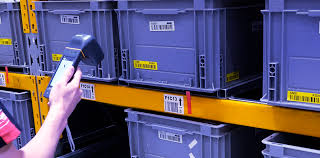
The global logistics sector is undergoing a transformative shift as RFID logistic labels emerge as the cornerstone of modern supply chain management. At the recently concluded Global Logistics Expo 2025, leading technology providers showcased cutting-edge RFID solutions designed to enhance traceability, reduce operational costs, and meet stringent compliance requirements across industries such as retail, healthcare, and food logistics.
RFID Logistic Labels Revolutionize Supply Chain Efficiency

In the era of Industry 4.0,RFID labels have emerged as a cornerstone of intelligent supply chain management, asset tracking, and consumer engagement. These compact devices, embedded with microchips and antennas, enable wireless data transmission, offering unparalleled efficiency compared to traditional barcodes. From retail to healthcare, RFID labels are revolutionizing operations across diverse sectors.
RFID Fin Tag Revolutionizes Retail Inventory Management

Relying on the advantages of batch identification of multiple tags and non-contact reading, RFID technology has realized the intelligent upgrading of the entire logistics link. Among them, the RFID UHF tags and RFID UHF tire tags developed by RFID tag manufacturers for logistics scenarios have solved the pain points of package management and transportation safety respectively, becoming a key support for smart logistics.
Application of RFID Tags in Express Logistics Industry