
How RFID Tags Are Revolutionizing Safety and Efficiency
author: admin
2025-08-18

How RFID Tags Are Revolutionizing Safety and Efficiency
RFID tag manufacturers develop various types of RFID tags, which bring great convenience to medical care. The application of RFID technology in surgical procedures significantly enhances patient safety, surgical efficiency, and healthcare quality while reducing human errors and medical incidents.
1. Low-Frequency RFID Tags (125-134 kHz)
Low-frequency RFID tags are primarily used in operating rooms for patient identification and surgical instrument tracking. Their advantage lies in the ability to penetrate liquids and non-metallic substances, making them suitable for use in wet environments. For example, low-frequency RFID wristbands worn by patients ensure correct patient identification before, during, and after surgery, preventing surgical errors. Additionally, low-frequency tags are commonly used to track surgical instruments soaking in disinfectant solutions, ensuring complete records of the sterilization process.
2. High-Frequency RFID Tags (13.56 MHz)
High-frequency RFID has broader applications in operating rooms, mainly for:
- Surgical consumables management: Tracking implants, sutures, and other disposable items
- Medication management: Real-time monitoring of anesthetic drugs and blood products
- Surgical sponge and instrument counts: Preventing retained surgical items
The fast read capability of high-frequency tags makes them suitable for batch scanning at critical surgical junctures, such as inventory checks before and after procedures.
3. Ultra-High-Frequency RFID Tags (860-960 MHz)
UHF tags are suitable for the following applications due to their long read range (up to 10 meters):
- Large equipment tracking: Locating valuable equipment like C-arm X-ray machines and anesthesia systems
- Personnel tracking: Monitoring positions of surgical team members to optimize OR workflows
- Real-time environmental monitoring: Combined with sensors to track OR temperature, humidity, and other parameters
4. Active RFID Tags
Active RFID tags have built-in batteries, offering longer read ranges and greater data storage capacity. They are used in surgery for:
- High-value implant tracking: Such as artificial joints and pacemakers
- Cold chain monitoring: Transport monitoring for temperature-sensitive transplant organs and biological products
- Real-Time Location Systems (RTLS): Precise tracking of all assets and personnel in the OR
5. Sensor-Integrated RFID Tags
These tags incorporate environmental sensors to monitor:
-Sterilization parameters: Recording sterilization temperature and pressure for surgical instruments
- Usage cycles: Tracking instrument usage counts to predict maintenance needs
- Environmental conditions: Ensuring the OR meets aseptic requirements
-Sterilization parameters: Recording sterilization temperature and pressure for surgical instruments
- Usage cycles: Tracking instrument usage counts to predict maintenance needs
- Environmental conditions: Ensuring the OR meets aseptic requirements
RFID Automating for Accuracy and Savings
How RFID Technology is Reshaping the Future of the Textile Industry with RFID UHF laundry tag
Related Article

Against the backdrop of accelerated urbanization and a surge in motor vehicle ownership, traditional traffic management models face pain points such as low efficiency and difficult control. Specialized tags developed by RFID tag manufacturers for traffic scenarios, such as RFID License Plate Tag and UHF windshield tags, have been deeply integrated into the entire chain of vehicle control, parking management, and public transportation scheduling.
RFID Tags Powering Smart Traffic Management Upgrade
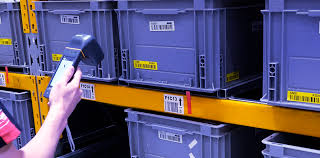
The global logistics sector is undergoing a transformative shift as RFID logistic labels emerge as the cornerstone of modern supply chain management. At the recently concluded Global Logistics Expo 2025, leading technology providers showcased cutting-edge RFID solutions designed to enhance traceability, reduce operational costs, and meet stringent compliance requirements across industries such as retail, healthcare, and food logistics.
RFID Logistic Labels Revolutionize Supply Chain Efficiency

In the era of Industry 4.0,RFID labels have emerged as a cornerstone of intelligent supply chain management, asset tracking, and consumer engagement. These compact devices, embedded with microchips and antennas, enable wireless data transmission, offering unparalleled efficiency compared to traditional barcodes. From retail to healthcare, RFID labels are revolutionizing operations across diverse sectors.
RFID Fin Tag Revolutionizes Retail Inventory Management

Relying on the advantages of batch identification of multiple tags and non-contact reading, RFID technology has realized the intelligent upgrading of the entire logistics link. Among them, the RFID UHF tags and RFID UHF tire tags developed by RFID tag manufacturers for logistics scenarios have solved the pain points of package management and transportation safety respectively, becoming a key support for smart logistics.
Application of RFID Tags in Express Logistics Industry