
Application Value of RFID High-Frequency and UHF Tags in Library Management
author: admin
2025-11-14

Application Value of RFID High-Frequency and UHF Tags in Library Management
In the digital transformation of modern library management, RFID technology has become a core support due to its efficient identification capability. Among them, RFID high-frequency (HF) tags and ultra-high frequency (UHF) tags, with their different characteristics, are respectively adapted to the diverse scenarios of library management. As a key supplier, the RFID tag manufacturer needs to accurately match scenario requirements and provide RFID NFC library labels and UHF library labels with both stability and cost-effectiveness, promoting library management from the traditional manual mode to a new intelligent stage.
The RFID NFC library label, i.e., high-frequency RFID library tag, operates at a frequency of 13.56MHz, and its core advantages lie in short-range accurate identification and data interaction capabilities. In the book borrowing process, readers only need to bring the book with this tag close to the self-service borrowing and returning terminal. The identification distance of 0.1-1 meter can avoid misreading of multiple books, and the terminal can complete the writing of borrowing information and system synchronization within 3 seconds, greatly reducing queuing time. In the collection positioning scenario, the anti-metal interference feature of high-frequency tags enables them to be stably attached to hardcover books and books with metal accessories. Administrators can quickly locate misplaced books by scanning the bookshelves with a handheld terminal, with a positioning error of no more than 5 centimeters. In addition, the NFC interaction function it supports allows readers to touch the tag with their mobile phones to obtain book summaries, recommended book lists and other information, enhancing the reading experience.
The UHF library label (UHF RFID library tag) operates at a frequency of 860-960MHz, and its long-range batch identification capability is its core competitiveness. In the book inventory scenario, administrators use UHF handheld terminals, which can identify dozens of labeled books simultaneously within a distance of 3-10 meters. The inventory of 1,000 volumes can be completed within one hour, and the efficiency is 3-5 times higher than that of high-frequency tags, which is especially suitable for large libraries and dense stacks. In the book sorting process, UHF tags can cooperate with conveyor belt identification equipment to realize automatic book classification and shelf guidance, reducing the error rate of manual sorting. However, its identification accuracy is easily interfered by metal and liquid, so it is necessary to cooperate with the RFID tag manufacturer to optimize the tag design.
The collaborative application of the two types of tags can optimize the entire process of library management: high-frequency tags are responsible for short-range fine operations such as borrowing and positioning, while UHF tags undertake long-range batch operations such as inventory and sorting. The RFID tag manufacturer needs to provide customized tag products and technical support according to the needs of the library's scale and book type, ensuring that the RFID NFC library label and UHF library label are seamlessly connected with the library management system, and ultimately realizing the efficiency, intelligence and humanization of library management.
Roll-Form RFID Laundry Tags
RFID Tags in High-Temperature Environments
Related Article
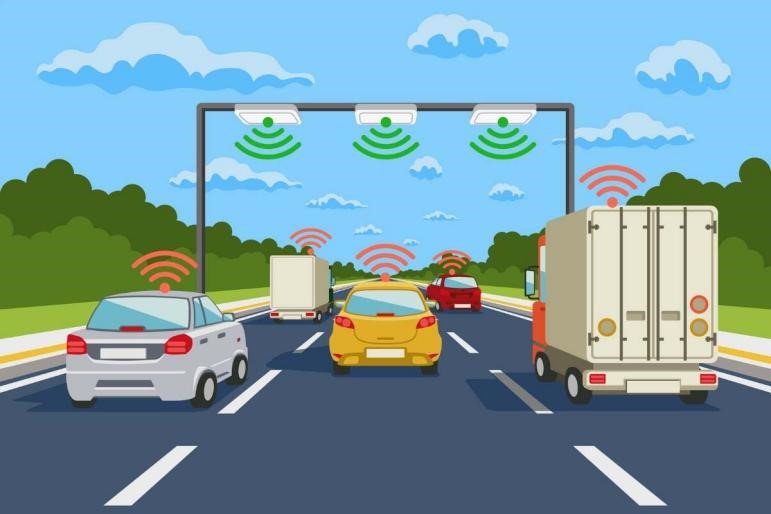
Against the backdrop of accelerated urbanization and a surge in motor vehicle ownership, traditional traffic management models face pain points such as low efficiency and difficult control. Specialized tags developed by RFID tag manufacturers for traffic scenarios, such as RFID License Plate Tag and UHF windshield tags, have been deeply integrated into the entire chain of vehicle control, parking management, and public transportation scheduling.
RFID Tags Powering Smart Traffic Management Upgrade
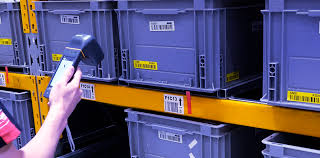
The global logistics sector is undergoing a transformative shift as RFID logistic labels emerge as the cornerstone of modern supply chain management. At the recently concluded Global Logistics Expo 2025, leading technology providers showcased cutting-edge RFID solutions designed to enhance traceability, reduce operational costs, and meet stringent compliance requirements across industries such as retail, healthcare, and food logistics.
RFID Logistic Labels Revolutionize Supply Chain Efficiency

In the era of Industry 4.0,RFID labels have emerged as a cornerstone of intelligent supply chain management, asset tracking, and consumer engagement. These compact devices, embedded with microchips and antennas, enable wireless data transmission, offering unparalleled efficiency compared to traditional barcodes. From retail to healthcare, RFID labels are revolutionizing operations across diverse sectors.
RFID Fin Tag Revolutionizes Retail Inventory Management

Relying on the advantages of batch identification of multiple tags and non-contact reading, RFID technology has realized the intelligent upgrading of the entire logistics link. Among them, the RFID UHF tags and RFID UHF tire tags developed by RFID tag manufacturers for logistics scenarios have solved the pain points of package management and transportation safety respectively, becoming a key support for smart logistics.
Application of RFID Tags in Express Logistics Industry