
Types of On metal RFID tags
author: admin
2025-11-24
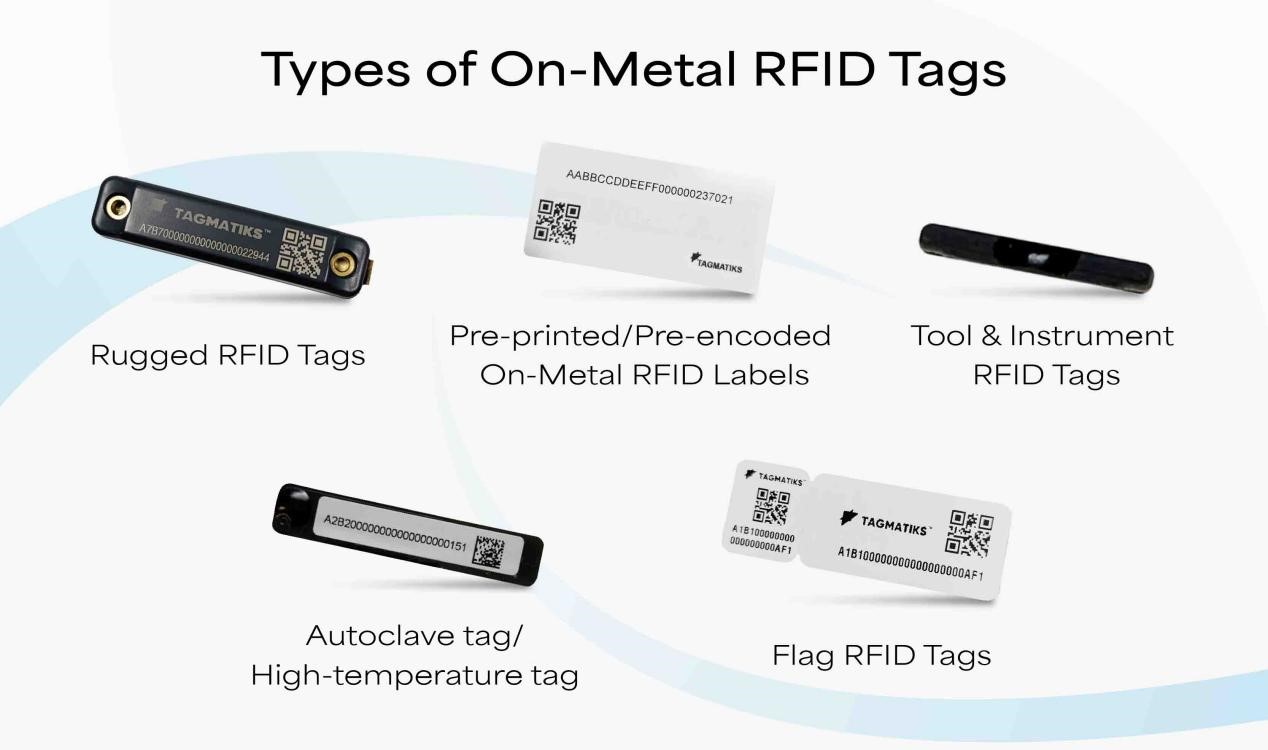
Types of On metal RFID tags
In the dynamic world of radio - frequency identification (RFID) technology, on metal RFID stickers have emerged as a game - changer, especially in industries where assets are often in close proximity to metallic surfaces. These specialized tags are designed to overcome the challenges posed by metal, which can interfere with the normal operation of traditional RFID tags. Let's delve into the various types of on - metal RFID tags and their unique applications.
1. Passive On - Metal RFID Tags
1.1 Standard Passive On - Metal Tags
Standard passive on metal RFID tags are the most common type in the market. They rely on the energy harvested from the RFID reader's electromagnetic field to power their operation. These tags are typically small, lightweight, and cost - effective. They are widely used in applications such as tracking metal tools in manufacturing plants. For example, in an automotive assembly line, hundreds of metal tools are used daily. By attaching standard passive on - metal tags to these tools, workers can easily locate and manage them using RFID readers. This not only improves operational efficiency but also reduces the risk of tool loss or misplacement.
1.2 High - Performance Passive On - Metal Tags
High - performance passive on - metal tags are engineered to offer enhanced read ranges and better performance in challenging environments. They often incorporate advanced antenna designs and materials to optimize signal transmission and reception. These tags are suitable for applications where long - range identification is crucial, such as in large - scale logistics warehouses. In a warehouse with vast metal racks and shelves, high - performance passive on - metal tags can be attached to metal pallets or containers. The RFID readers can then accurately identify and track the movement of these items from a distance, streamlining the inventory management process.
2. Active On - Metal RFID Tags
2.1 Battery - Powered Active On - Metal Tags
Battery - powered active on - metal RFID tags have an internal power source, usually a small battery, which allows them to transmit signals continuously or at regular intervals. This gives them a significantly longer read range compared to passive tags. They are ideal for applications that require real - time tracking of high - value metal assets. For instance, in the aerospace industry, active on - metal tags can be attached to aircraft components. These tags can continuously send location and status information to a central monitoring system, enabling maintenance personnel to quickly locate and inspect components, ensuring the safety and reliability of the aircraft.
2.2 Semi - Active On - Metal Tags
Semi - active on - metal tags, also known as battery - assisted passive (BAP) tags, combine the features of passive and active tags. They have a small battery that is used to power the tag's internal circuitry, but they still rely on the RFID reader's signal to initiate data transmission. This hybrid approach offers a balance between cost and performance. Semi - active on - metal tags are often used in applications where a longer read range is needed than what passive tags can provide, but the cost of fully active tags is too high. For example, in the construction industry, semi - active on - metal tags can be attached to large metal construction equipment. They can be read from a moderate distance, allowing site managers to keep track of the equipment's location and usage.
3. Special - Purpose On - Metal RFID Tags
3.1 Rugged On - Metal Tags
Rugged on metal RFID tags are designed to withstand harsh environmental conditions such as extreme temperatures, vibrations, and exposure to chemicals. They are typically made of durable materials and have a robust housing to protect the internal components. These tags are commonly used in industries like oil and gas, where metal equipment is often exposed to challenging outdoor environments. For example, in an offshore oil rig, rugged on - metal tags can be attached to metal pipes and valves. They can continue to function reliably even in the presence of saltwater, high winds, and temperature fluctuations, ensuring accurate asset tracking and maintenance.
3.2 Flexible On - Metal Tags
Flexible on - metal RFID tags are thin and bendable, allowing them to conform to the shape of curved metal surfaces. This makes them suitable for applications where a low - profile tag is required. For example, in the electronics manufacturing industry, flexible on - metal tags can be attached to the metal casings of electronic devices. They do not add significant bulk to the product and can still provide reliable identification and tracking throughout the production and distribution process.
In conclusion, the variety of on - metal RFID tags available in the market caters to a wide range of industrial and commercial applications. Whether it's for simple tool tracking in a manufacturing plant or real - time asset monitoring in the aerospace industry, there is an on - metal RFID tag type that can meet the specific requirements. As RFID technology continues to evolve, we can expect to see even more innovative on - metal tag designs and applications in the future, further enhancing the efficiency and accuracy of asset management systems.
RFID Tags Strengthen the Food Safety Line
RFID Labels and Inlays Comprehensive Analysis of Core Differences
Related Article

Against the backdrop of accelerated urbanization and a surge in motor vehicle ownership, traditional traffic management models face pain points such as low efficiency and difficult control. Specialized tags developed by RFID tag manufacturers for traffic scenarios, such as RFID License Plate Tag and UHF windshield tags, have been deeply integrated into the entire chain of vehicle control, parking management, and public transportation scheduling.
RFID Tags Powering Smart Traffic Management Upgrade

The global logistics sector is undergoing a transformative shift as RFID logistic labels emerge as the cornerstone of modern supply chain management. At the recently concluded Global Logistics Expo 2025, leading technology providers showcased cutting-edge RFID solutions designed to enhance traceability, reduce operational costs, and meet stringent compliance requirements across industries such as retail, healthcare, and food logistics.
RFID Logistic Labels Revolutionize Supply Chain Efficiency

In the era of Industry 4.0,RFID labels have emerged as a cornerstone of intelligent supply chain management, asset tracking, and consumer engagement. These compact devices, embedded with microchips and antennas, enable wireless data transmission, offering unparalleled efficiency compared to traditional barcodes. From retail to healthcare, RFID labels are revolutionizing operations across diverse sectors.
RFID Fin Tag Revolutionizes Retail Inventory Management

Relying on the advantages of batch identification of multiple tags and non-contact reading, RFID technology has realized the intelligent upgrading of the entire logistics link. Among them, the RFID UHF tags and RFID UHF tire tags developed by RFID tag manufacturers for logistics scenarios have solved the pain points of package management and transportation safety respectively, becoming a key support for smart logistics.
Application of RFID Tags in Express Logistics Industry