
How RFID Tags Work in Warehouse
author: admin
2025-10-16
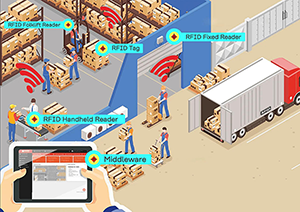
How RFID Tags Work in Warehouse
In the era of Industry 4.0, Radio Frequency Identification technology has emerged as a game-changer for warehouse operations, transforming traditional inventory management into a seamless, automated process. By leveraging wireless communication, RFID UHF/HF tags enable real-time tracking, error-free data capture, and enhanced operational efficiency, making them indispensable in modern logistics.
The Core Mechanism: How RFID Tags Function
RFID software systems consist of three key components: tags, readers, and software.
Tags: Embedded with microchips and antennas, RFID tags store unique identifiers and product data. These tags RFID can be passive (powered by electromagnetic energy from readers) or active (battery-powered for longer range). Passive RFID stickers, cost-effective and durable, dominate warehouse applications due to their affordability and 10+ year lifespan.
Readers: Deployed at entry/exit points, shelves, or forklifts, readers emit radio waves to activate tags and capture their data. Advanced readers can scan hundreds of tags simultaneously, even through packaging or at distances exceeding 10 meters.
Software: Integrated with Warehouse Management Systems (WMS), RFID software processes tag data to update inventory records, trigger alerts, and optimize workflows.
When a tagged item enters a reader’s range, the tag transmits its data wirelessly. The reader decodes this information and syncs it with the WMS, eliminating manual barcode scanning and reducing human errors by up to 80%.
Applications Driving Warehouse Transformation
Automated Inbound/Outbound Processes
RFID gates at dock doors automatically register incoming shipments, cross-checking them against purchase orders. For outbound goods, readers validate orders against shipping lists, preventing mismatches. A 2025 case study revealed that an e-commerce giant reduced order processing time by 50% and error rates by 80% after implementing RFID.
Real-Time Inventory Visibility
Tags enable granular tracking of item locations, quantities, and movements. For instance, automotive manufacturers use RFID to monitor thousands of parts across sprawling warehouses, achieving 98% inventory accuracy—up from 70% with traditional methods.
Cycle Counting Without Disruption
Handheld RFID readers allow staff to scan entire aisles in minutes, generating real-time stock reports. This slashes annual (inventory audit) time from weeks to hours, as demonstrated by a 3PL company that cut labor costs by 30% while eliminating discrepancies.
Asset Security and Condition Monitoring
Some UHF RFID tags incorporate sensors to monitor temperature, humidity, or shock. If a pharmaceutical shipment exceeds storage thresholds, the system triggers alerts, safeguarding high-value goods. Military warehouses even use RFID-encrypted tags to prevent theft of sensitive equipment.
Industry-Specific Innovations
Retail: RFID-enabled smart shelves automatically reorder stock when levels drop, ensuring shelves are never empty.
Healthcare: Hospitals track medical supplies with RFID, reducing expiration waste and ensuring critical items are always available.
Cross-Border Logistics: Combined with blockchain, RFID provides tamper-proof visibility for global supply chains, boosting trade compliance.
Future Trends: AI and Sustainability
The next frontier involves integrating RFID with AI and IoT. Predictive analytics will forecast demand using RFID-derived data, while autonomous robots guided by RFID tags will execute picking and restocking. Additionally, RFID supports green logistics by minimizing paperwork and optimizing delivery routes.
Conclusion
RFID technology is redefining warehouse efficiency, accuracy, and security. As costs decline and capabilities expand, its adoption is poised to grow beyond large enterprises to SMEs, cementing its role as the backbone of smart warehousing. For businesses seeking agility in a competitive market, investing in RFID is no longer optional—it’s a strategic imperative..
RFID Tags Empower Smart Parking Lots to Solve Parking Difficulties and Improve Operational Efficiency
RFID Tag Manufacturers Drive Efficient Jewelry Tracking With UHF Tags
Related Article

Against the backdrop of accelerated urbanization and a surge in motor vehicle ownership, traditional traffic management models face pain points such as low efficiency and difficult control. Specialized tags developed by RFID tag manufacturers for traffic scenarios, such as RFID License Plate Tag and UHF windshield tags, have been deeply integrated into the entire chain of vehicle control, parking management, and public transportation scheduling.
RFID Tags Powering Smart Traffic Management Upgrade
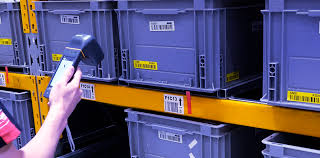
The global logistics sector is undergoing a transformative shift as RFID logistic labels emerge as the cornerstone of modern supply chain management. At the recently concluded Global Logistics Expo 2025, leading technology providers showcased cutting-edge RFID solutions designed to enhance traceability, reduce operational costs, and meet stringent compliance requirements across industries such as retail, healthcare, and food logistics.
RFID Logistic Labels Revolutionize Supply Chain Efficiency

In the era of Industry 4.0,RFID labels have emerged as a cornerstone of intelligent supply chain management, asset tracking, and consumer engagement. These compact devices, embedded with microchips and antennas, enable wireless data transmission, offering unparalleled efficiency compared to traditional barcodes. From retail to healthcare, RFID labels are revolutionizing operations across diverse sectors.
RFID Fin Tag Revolutionizes Retail Inventory Management
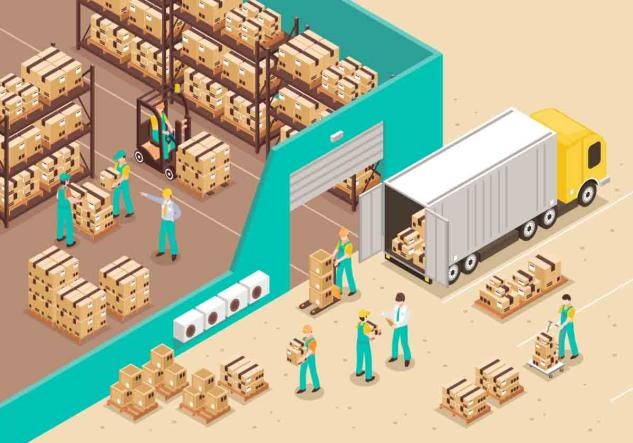
Relying on the advantages of batch identification of multiple tags and non-contact reading, RFID technology has realized the intelligent upgrading of the entire logistics link. Among them, the RFID UHF tags and RFID UHF tire tags developed by RFID tag manufacturers for logistics scenarios have solved the pain points of package management and transportation safety respectively, becoming a key support for smart logistics.
Application of RFID Tags in Express Logistics Industry