
The Integration of Fixed Asset Management and RFID Technology
author: admin
2025-07-04

The Integration of Fixed Asset Management and RFID Technology
Fixed asset management (FAM) is a critical component of corporate operations, covering the entire lifecycle of assets from procurement and tracking to maintenance and disposal. Traditional methods rely on manual inventory and paper-based records, which are inefficient and error-prone. Radio Frequency Identification (RFID) technology, enabling automatic object identification via wireless signals, revolutionizes asset management. This article explores how RFID optimizes fixed asset management processes.
RFID Technology Principles and Advantages
1. Technical Principles: An RFID system consists of RFID tags, RFID readers, and a backend database. Tags embed microchips and antennas to store unique IDs, while readers transmit data via radio waves.
- Passive RFID Tag: No battery required, powered by readers; low-cost but short-range (<10m).
- Active RFID Tag: Battery-powered for long-range (up to 100m), ideal for high-value assets.
2. Key Advantages:
- Contactless Identification: No line-of-sight needed, with bulk-reading capability (hundreds of tags/sec).
- Real-time Data: Automatically updates asset status, minimizing manual effort.
- Anti-Counterfeiting: Encrypted chips prevent tampering or theft.
Application Scenarios
1. Automated Inventory: Traditional methods require shutdowns and days of work; RFID enables
"walk-through inventory" with 90%+ efficiency gains.
- Case: Walmart improved inventory accuracy from 63% to 95% with RFID UHF labels.
2. Asset Tracking: In hospitals, RFID-tagged equipment reduces idle time via real-time location.
- Case: Cisco saved $2.7M annually in loss prevention.
3. Preventive Maintenance: Sensor-enabled RFID monitors temperature/vibration to trigger repairs.
Challenges and Solutions
1. Cost: Passive tag prices dropped below $0.1, enabling mass adoption.
2. Interference: Metal-mount tags or HF RFID mitigate signal issues.
Future Outlook
The integration of RFID with IoT and blockchain will create transparent asset networks. For instance, RFID-equipped drones enable fully automated smart warehouses.
RFID Technology Revolutionizes Food Traceability: A Transparent Journey from Farm to Fork
Smart Factories Rely on RFID for Real-Time Asset Management
Related Article

Against the backdrop of accelerated urbanization and a surge in motor vehicle ownership, traditional traffic management models face pain points such as low efficiency and difficult control. Specialized tags developed by RFID tag manufacturers for traffic scenarios, such as RFID License Plate Tag and UHF windshield tags, have been deeply integrated into the entire chain of vehicle control, parking management, and public transportation scheduling.
RFID Tags Powering Smart Traffic Management Upgrade
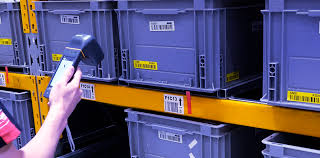
The global logistics sector is undergoing a transformative shift as RFID logistic labels emerge as the cornerstone of modern supply chain management. At the recently concluded Global Logistics Expo 2025, leading technology providers showcased cutting-edge RFID solutions designed to enhance traceability, reduce operational costs, and meet stringent compliance requirements across industries such as retail, healthcare, and food logistics.
RFID Logistic Labels Revolutionize Supply Chain Efficiency

In the era of Industry 4.0,RFID labels have emerged as a cornerstone of intelligent supply chain management, asset tracking, and consumer engagement. These compact devices, embedded with microchips and antennas, enable wireless data transmission, offering unparalleled efficiency compared to traditional barcodes. From retail to healthcare, RFID labels are revolutionizing operations across diverse sectors.
RFID Fin Tag Revolutionizes Retail Inventory Management

Relying on the advantages of batch identification of multiple tags and non-contact reading, RFID technology has realized the intelligent upgrading of the entire logistics link. Among them, the RFID UHF tags and RFID UHF tire tags developed by RFID tag manufacturers for logistics scenarios have solved the pain points of package management and transportation safety respectively, becoming a key support for smart logistics.
Application of RFID Tags in Express Logistics Industry