
Revolutionary Application of RFID Tags in Logistics
author: admin
2025-04-07

Revolutionary Application of RFID Tags in Logistics
With the rapid development of the global logistics industry, traditional barcode technology has gradually become inadequate to meet the modern logistics demands for efficiency, accuracy, and automation. In this context, Radio Frequency Identification (RFID) technology has emerged and quickly become a vital tool in the logistics sector. passive RFID tags automatically identify target objects and retrieve related data through wireless radio frequency signals, eliminating the need for manual intervention and significantly enhancing logistics efficiency.
Basic Principles of Passive RFID Technology
An RFID system mainly consists of three components: tags, readers, and a backend system. Tags are embedded with chips and antennas, capable of storing and transmitting data; readers communicate with tags via radio frequency signals to read or write information; the backend system processes and analyzes the data. Compared to traditional barcode technology, RFID tags offer advantages such as non-contact identification, simultaneous multi-target recognition, large data storage capacity, and strong resistance to contamination.
Applications of RFID in Logistics
1. Inventory Management
Passive RFID labels can monitor inventory status in real-time, enabling precise inventory management for businesses. For example, in warehouses, RFID readers can automatically scan goods on shelves, updating inventory data in real-time and reducing errors and time costs associated with manual stocktaking.
2. Transportation Tracking
During transportation, RFID tags can track the location and status of goods in real-time. For instance, logistics companies can install RFID readers on trucks to automatically record loading and unloading information, updating logistics data in real-time through the backend system, thereby improving transparency and efficiency.
3. Automated Sorting
RFID technology plays a crucial role in automated sorting systems. For example, in parcel sorting centers, RFID tags can quickly identify the destination of packages and allocate them to the corresponding sorting channels through automated equipment, significantly improving sorting speed and accuracy.
4. Anti-Counterfeiting and Traceability
RFID tags can also be used for anti-counterfeiting and traceability of goods. For instance, in the luxury goods or pharmaceutical industries, RFID tags can record production, transportation, and sales information, allowing consumers to verify the authenticity of products and trace their origins by scanning the tags.
Advantages and Challenges of RFID Technology
The application of RFID technology has brought significant benefits to the logistics industry. Firstly, it improves logistics efficiency, reducing manual intervention and error rates. Secondly, it enhances the real-time and accuracy of data, providing strong support for decision-making. Lastly, it improves customer experience by offering real-time tracking and transparent management, increasing customer trust.
However, the promotion of RFID technology also faces some challenges. Firstly, the cost of RFID tags is relatively high, especially in large-scale applications, where cost issues may become a limiting factor. Secondly, the standardization of RFID technology is not yet fully unified, and equipment and systems from different manufacturers may face compatibility issues. Lastly, the security of RFID technology needs further enhancement to prevent data breaches and malicious attacks.
Future Outlook
With continuous technological advancements and gradual cost reductions, the application prospects of RFID technology in the logistics field are vast. In the future, RFID technology is expected to deeply integrate with artificial intelligence, big data, and the Internet of Things (IoT), achieving more intelligent and automated logistics management. Meanwhile, the unification of industry standards and improvements in technological security will lay a solid foundation for the widespread adoption of RFID technology.
In conclusion, RFID tags are bringing revolutionary changes to the logistics industry, not only enhancing logistics efficiency but also providing critical support for the digital transformation of enterprises. As the technology matures further, RFID technology will play an even more significant role in the logistics sector.
RFID will be applied in what field in the near future
Why need RFID tags
Related Article

Against the backdrop of accelerated urbanization and a surge in motor vehicle ownership, traditional traffic management models face pain points such as low efficiency and difficult control. Specialized tags developed by RFID tag manufacturers for traffic scenarios, such as RFID License Plate Tag and UHF windshield tags, have been deeply integrated into the entire chain of vehicle control, parking management, and public transportation scheduling.
RFID Tags Powering Smart Traffic Management Upgrade
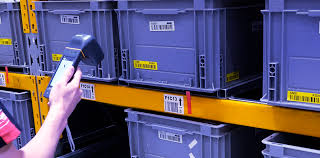
The global logistics sector is undergoing a transformative shift as RFID logistic labels emerge as the cornerstone of modern supply chain management. At the recently concluded Global Logistics Expo 2025, leading technology providers showcased cutting-edge RFID solutions designed to enhance traceability, reduce operational costs, and meet stringent compliance requirements across industries such as retail, healthcare, and food logistics.
RFID Logistic Labels Revolutionize Supply Chain Efficiency

In the era of Industry 4.0,RFID labels have emerged as a cornerstone of intelligent supply chain management, asset tracking, and consumer engagement. These compact devices, embedded with microchips and antennas, enable wireless data transmission, offering unparalleled efficiency compared to traditional barcodes. From retail to healthcare, RFID labels are revolutionizing operations across diverse sectors.
RFID Fin Tag Revolutionizes Retail Inventory Management

Relying on the advantages of batch identification of multiple tags and non-contact reading, RFID technology has realized the intelligent upgrading of the entire logistics link. Among them, the RFID UHF tags and RFID UHF tire tags developed by RFID tag manufacturers for logistics scenarios have solved the pain points of package management and transportation safety respectively, becoming a key support for smart logistics.
Application of RFID Tags in Express Logistics Industry