
RFID Tags Revolutionize Efficiency in the Automotive Industry
author: admin
2025-08-08

RFID Tags Revolutionize Efficiency in the Automotive Industry
RFID technology is rapidly transforming automotive manufacturing and RFID logistics, driving unprecedented levels of efficiency, accuracy, and visibility across the global supply chain, industry leaders report.
Gone are the days of manual scanning and error-prone tracking. Automotive giants like Ford, BMW, Toyota, and Volkswagen are increasingly embedding passive UHF RFID tags into critical components – from engines and transmissions to seats and door panels – long before they reach the assembly line. These tiny, durable chips, read wirelessly by strategically placed antennas, provide real-time data without line-of-sight requirements.
Tags on containers, racks, and individual parts track movements from suppliers to factories globally, drastically reducing loss and enabling just-in-sequence delivery. RFID gives us a real-time digital thread of every component's journey stated Elena Rodriguez, VP of Global Logistics at a major European OEM. "We've seen inbound logistics errors drop by over 30%."
As tagged parts arrive at the assembly line, UHF RFID readers automatically verify the correct part is in the right place at the right time for each specific vehicle configuration (VIN), preventing costly assembly mistakes and rework. BMW credits RFID with significantly reducing errors in complex customization processes with cost effective price
Inventory Management Revolution, Warehouse inventories are automated. RFID enables rapid, bulk scanning of entire shelves or racks in seconds, eliminating manual counts and providing 99.9% inventory accuracy. This frees up significant labor and warehouse space.
Vehicles on the assembly line carry RFID tags (often on carriers or the chassis itself), allowing managers to track progress in real-time, identify bottlenecks instantly, and optimize workflow.
Tags embedded in key parts help combat counterfeiting, streamline warranty claims verification, and facilitate efficient recall management by pinpointing affected components.
Reports indicate reductions in manual scanning labor by 70-80% and inventory count times by over 90%.
Significant Cost Reduction and Reduced errors, less rework, optimized inventory levels, and minimized stockouts translate directly to the bottom line. Studies suggest overall operational cost reductions of 15-20% in tagged processes.
Looking ahead, RFID is poised to become even more integral as the industry embraces Industry 4.0. Integration with IoT sensors, Artificial Intelligence for predictive analytics based on RFID data flows, and potential synergy with blockchain for enhanced security and traceability represent the next frontier.
RFID is no longer a niche technology in automotive; it's becoming foundational infrastructure,commented Kenji Tanaka, a manufacturing technology analyst. "The ability to have granular, real-time visibility of every physical asset is critical for competitiveness in an era demanding mass customization, agility, and relentless cost efficiency. The race to fully digitize the physical supply chain is well underway."
As automotive production grows increasingly complex and consumer demands for customization rise, RFID tags are proving to be the silent workhorses ensuring the industry's engine runs smoother, faster, and smarter than ever before.
As automotive production grows increasingly complex and consumer demands for customization rise, RFID tags are proving to be the silent workhorses ensuring the industry's engine runs smoother, faster, and smarter than ever before.
Customized RFID Tag Development Sets New Standards for Smart Ports
RFID Enables the Campus More Intelligent and Emotional
Related Article

Against the backdrop of accelerated urbanization and a surge in motor vehicle ownership, traditional traffic management models face pain points such as low efficiency and difficult control. Specialized tags developed by RFID tag manufacturers for traffic scenarios, such as RFID License Plate Tag and UHF windshield tags, have been deeply integrated into the entire chain of vehicle control, parking management, and public transportation scheduling.
RFID Tags Powering Smart Traffic Management Upgrade
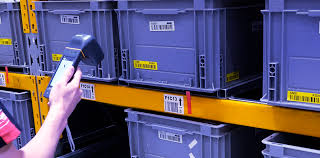
The global logistics sector is undergoing a transformative shift as RFID logistic labels emerge as the cornerstone of modern supply chain management. At the recently concluded Global Logistics Expo 2025, leading technology providers showcased cutting-edge RFID solutions designed to enhance traceability, reduce operational costs, and meet stringent compliance requirements across industries such as retail, healthcare, and food logistics.
RFID Logistic Labels Revolutionize Supply Chain Efficiency

In the era of Industry 4.0,RFID labels have emerged as a cornerstone of intelligent supply chain management, asset tracking, and consumer engagement. These compact devices, embedded with microchips and antennas, enable wireless data transmission, offering unparalleled efficiency compared to traditional barcodes. From retail to healthcare, RFID labels are revolutionizing operations across diverse sectors.
RFID Fin Tag Revolutionizes Retail Inventory Management

Relying on the advantages of batch identification of multiple tags and non-contact reading, RFID technology has realized the intelligent upgrading of the entire logistics link. Among them, the RFID UHF tags and RFID UHF tire tags developed by RFID tag manufacturers for logistics scenarios have solved the pain points of package management and transportation safety respectively, becoming a key support for smart logistics.
Application of RFID Tags in Express Logistics Industry