
RFID Tags Solve Luxury Counterfeit Problems and Improve Management Efficiency
author: admin
2025-10-11

RFID Tags Solve Luxury Counterfeit Problems and Improve Management Efficiency
As the scale of the luxury goods market expands, problems such as the proliferation of counterfeits, inventory chaos, and difficulty in traceability have become increasingly prominent. RFID (Radio Frequency Identification) tags, with their characteristics of accurate tracking and efficient identification, have become a key technology for the digital transformation of the luxury goods industry. RFID tag manufacturers develop various sizes and models of RFID anti-theft tags, combined with UHF function and magnetic stick, which can realize inventory counting and also play an anti-theft function.
In the field of anti-counterfeiting and traceability, the application of RFID tags is the most core. Luxury brands embed tags with unique electronic codes into products—such as in the stitching of bags, the care labels of clothing, or directly integrated into metal nameplates. Consumers can scan the tag through the brand's official APP to check the product's place of production, production date, supply chain links, and authorized sales channels, easily distinguishing between genuine and counterfeit products; brand owners can also real-time monitor the product flow through the background system, curbing the circulation of counterfeits from the source. For example, brands such as Hermès and Louis Vuitton have fully adopted this technology in their high-end product lines, with the accuracy of counterfeit identification increased to over 99%.
In terms of inventory management, RFID UHF labels greatly improve the efficiency of luxury retail. Traditional luxury store inventory requires employees to check product numbers one by one, and a medium-sized store usually takes 2-3 days to complete the entire store's inventory; by using an RFID reader to scan, staff only need to move the device beside the shelf to identify product information in batches, and the inventory can be completed within 2 hours, with an error rate of less than 0.5%. In addition, the tags can also update the product inventory status in real time. When the inventory of a certain handbag or watch is insufficient, the system will automatically trigger a replenishment reminder to avoid losing customers due to stockouts.
Full-lifecycle tracking provides support for luxury after-sales service and secondary circulation. Some high-end brands provide customers with "lifetime maintenance" services. RFID tags can record information such as the number of maintenance times and repair records of the product, making it easy for after-sales staff to quickly retrieve historical data and provide accurate services; in the second-hand luxury goods market, the genuine authentication information stored in the tags can enhance consumer trust and promote the standardization of second-hand transactions—platforms such as Secoo and Plum have required merchants to provide luxury goods with RFID tags, and the success rate of second-hand transactions has increased by more than 30%.
At the same time, the design of RFID tags also fits the high-end positioning of luxury goods. Tags mostly adopt miniaturized and invisible designs, with a thickness usually less than 0.8 mm, and the material is high-end fabric or metal material matching the product, avoiding damaging the appearance texture of luxury goods. For example, jewelry brand Cartier embeds a micro RFID tag inside the necklace pendant, which not only does not affect the appearance of the product but also realizes accurate traceability.
How to Optimize Warehouse Management Using RFID Tags
RFID Tags Revolutionize Document and File Management in Librarie
Related Article

Against the backdrop of accelerated urbanization and a surge in motor vehicle ownership, traditional traffic management models face pain points such as low efficiency and difficult control. Specialized tags developed by RFID tag manufacturers for traffic scenarios, such as RFID License Plate Tag and UHF windshield tags, have been deeply integrated into the entire chain of vehicle control, parking management, and public transportation scheduling.
RFID Tags Powering Smart Traffic Management Upgrade
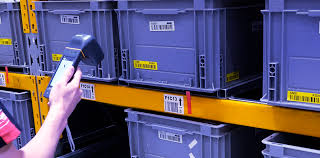
The global logistics sector is undergoing a transformative shift as RFID logistic labels emerge as the cornerstone of modern supply chain management. At the recently concluded Global Logistics Expo 2025, leading technology providers showcased cutting-edge RFID solutions designed to enhance traceability, reduce operational costs, and meet stringent compliance requirements across industries such as retail, healthcare, and food logistics.
RFID Logistic Labels Revolutionize Supply Chain Efficiency

In the era of Industry 4.0,RFID labels have emerged as a cornerstone of intelligent supply chain management, asset tracking, and consumer engagement. These compact devices, embedded with microchips and antennas, enable wireless data transmission, offering unparalleled efficiency compared to traditional barcodes. From retail to healthcare, RFID labels are revolutionizing operations across diverse sectors.
RFID Fin Tag Revolutionizes Retail Inventory Management

Relying on the advantages of batch identification of multiple tags and non-contact reading, RFID technology has realized the intelligent upgrading of the entire logistics link. Among them, the RFID UHF tags and RFID UHF tire tags developed by RFID tag manufacturers for logistics scenarios have solved the pain points of package management and transportation safety respectively, becoming a key support for smart logistics.
Application of RFID Tags in Express Logistics Industry