
RFID cloth Tags – How they work and why you should be using them
author: admin
2025-12-08

RFID cloth Tags – How they work and why you should be using them
The global retail and textile industries are undergoing a silent revolution, powered by RFID cloth label. These tiny, unobtrusive devices are transforming inventory management, loss prevention, and customer experiences, with leading brands like Decathlon and Uniqlo already reaping significant benefits. Here’s a deep dive into how RFID cloth tags work and why they’re becoming indispensable for modern businesses.
How RFID Cloth Tags Work: The Science Behind the Technology
RFID cloth tags operate on a simple yet powerful principle: non-contact data exchange via electromagnetic waves. Each tag consists of a microchip and an antenna embedded in fabric or adhesive material. The system relies on three core components:
Passive cloth tags, the most common in retail, draw energy from the reader’s radio waves to activate and transmit data. These tags are lightweight, cost-effective, and ideal for clothing items.
Readers (Antennas + Hardware)
Readers emit radio signals at specific frequencies (e.g., 13.56 MHz for HF tags or 860–960 MHz for UHF tags). When a tag enters the electromagnetic field, its antenna captures the energy, powers the chip, and reflects the stored data back to the reader. Modern readers,can scan hundreds of tags simultaneously.
Why RFID Cloth Tags Are a Changer
Hyper-Efficient Inventory Management
RFID eliminates manual stock checks. For example, Uniqlo uses RFID to global inventory in real time, reducing overstock by 25% and stockouts by 40%. Workers with handheld readers can scan entire racks in seconds, cutting labor costs by up to 70%.
Self-checkout: Customers toss items into a basket, and RFID readers instantly tally the total, slashing wait times. Decathlon’s RFID-enabled checkout system reduced average transaction time from 3 minutes to 15 seconds.
Smart fitting rooms: Sensors detect tagged garments and suggest matching items via digital screens, boosting cross-selling by 30%.
Advanced Loss Prevention
RFID tags trigger alarms at exits if unpaid items pass through, reducing theft by up to 60%. Some systems combine RFID with acoustic-magnetic (AM) tags for dual-layer security, as seen in Zara’s stores.
Anti-Counterfeiting & Sustainability
Each tag stores a unique digital ID linked to blockchain records, enabling customers to verify authenticity via a smartphone scan. Brands like Burberry use RFID to track garments through recycling programs, ensuring ethical disposal.
The Future of RFID in Fashion
Experts predict RFID will evolve into smart RFID labels with embedded sensors monitoring temperature, humidity, or wear-and-tear—critical for luxury goods or medical textiles. By 2030, the global RFID market for apparel is expected to hit $16.2 billion, driven by 5G and AI integration.
Conclusion
RFID cloth tags are no longer a niche innovation; they’re a strategic imperative for retailers aiming to thrive in an omnichannel world. By adopting this technology, businesses can unlock unprecedented efficiency, transparency, and customer loyalty—proving that sometimes, the smallest tags make the biggest impact.
RFID Hardcore Technology Empowers Food Safety Traceability From Farm To Table
New Engine for Industrial Intelligent Upgrade Dual Empowerment of RFID Tags and Manufacturer Technology
Related Article

Against the backdrop of accelerated urbanization and a surge in motor vehicle ownership, traditional traffic management models face pain points such as low efficiency and difficult control. Specialized tags developed by RFID tag manufacturers for traffic scenarios, such as RFID License Plate Tag and UHF windshield tags, have been deeply integrated into the entire chain of vehicle control, parking management, and public transportation scheduling.
RFID Tags Powering Smart Traffic Management Upgrade
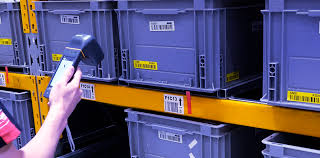
The global logistics sector is undergoing a transformative shift as RFID logistic labels emerge as the cornerstone of modern supply chain management. At the recently concluded Global Logistics Expo 2025, leading technology providers showcased cutting-edge RFID solutions designed to enhance traceability, reduce operational costs, and meet stringent compliance requirements across industries such as retail, healthcare, and food logistics.
RFID Logistic Labels Revolutionize Supply Chain Efficiency

In the era of Industry 4.0,RFID labels have emerged as a cornerstone of intelligent supply chain management, asset tracking, and consumer engagement. These compact devices, embedded with microchips and antennas, enable wireless data transmission, offering unparalleled efficiency compared to traditional barcodes. From retail to healthcare, RFID labels are revolutionizing operations across diverse sectors.
RFID Fin Tag Revolutionizes Retail Inventory Management

Relying on the advantages of batch identification of multiple tags and non-contact reading, RFID technology has realized the intelligent upgrading of the entire logistics link. Among them, the RFID UHF tags and RFID UHF tire tags developed by RFID tag manufacturers for logistics scenarios have solved the pain points of package management and transportation safety respectively, becoming a key support for smart logistics.
Application of RFID Tags in Express Logistics Industry