
How RFID anti-counterfeiting tags Eliminate Fakes and Gray Market Sales
author: admin
2025-07-28

How RFID anti-counterfeiting tags Eliminate Fakes and Gray Market Sales
As an advanced automatic identification technology, RFID (Radio Frequency Identification) technology plays an increasingly important role in anti-counterfeiting and anti-tampering. RFID tag manufacturers use the unique electronic coding and wireless communication technology of RFID tags to provide efficient and reliable anti-counterfeiting and tracking solutions for products.
Principles of RFID Anti-Counterfeiting
The anti-counterfeiting function of RFID jewelry tags is mainly achieved through the following aspects:
1.Unique Identifier: Each RFID tag has a globally unique electronic product code (EPC) that cannot be copied or forged. Manufacturers can bind this code with product information to create an immutable digital identity.
2.Encryption Technology: Advanced RFID tags have built-in encryption algorithms, and only authorized readers can read and verify tag information. Common encryption methods include DES, AES, etc., ensuring data security during transmission.
3.Physical Anti-Counterfeiting Features: RFID factory develops some RFID UHF labels by using special materials or tamper-proof designs. Once illegally removed, the labels will become invalid, preventing the labels from being transferred and reused.
4.Database Verification: RFID jewelry label information is connected in real-time to a central database. Consumers can verify product authenticity through dedicated devices or mobile apps, and the system records each query.
RFID Anti-Diversion Mechanism
In terms of preventing product diversion, RFID technology provides the following solutions:
1.End-to-End Tracking: Throughout the entire process from production to sales, RFID tags record product flow information, including production date, batch number, transportation route, and storage location.
2.Geofencing: By deploying an RFID uhf reader network, the system can monitor whether products enter unauthorized sales areas and immediately alert upon detecting diversion activities.
3.Ddistributor, preventing cross-regional sales or hoarding.
4.Data Analysis: The RFID data collected by the system can analyze product flow patterns, identify potential diversion risks, and optimize distribution strategies.
Implementation Advantages
Compared with traditional anti-counterfeiting methods (such as barcodes and security labels), RFID technology has significant advantages:
- Contactless reading, no line-of-sight required, high efficiency in batch reading
- Large data capacity, capable of storing rich product information
- Rewritable, allowing dynamic information updates
- Strong resistance to contamination, operable in harsh environments
- Integration with IoT technology for intelligent management
Application Cases
Currently, RFID anti-counterfeiting and anti-diversion technologies are widely used in:
1.Luxury Industry: Brands like LV and Gucci use RFID to combat counterfeits
2.Alcoholic Beverages: Premium spirits like Moutai and Wuliangye adopt RFID anti-counterfeiting
3.Pharmaceuticals: Tracking drug flow to prevent counterfeit drugs and diversion
4.Electronics: Manufacturers like Apple and Samsung use it for product authentication
Future Development Trends
With technological advancements, RFID anti-counterfeiting and anti-diversion systems will develop in the following directions:
1. Integration with blockchain technology to establish more transparent supply chains
2. Incorporation of sensors to monitor product conditions (e.g., temperature, humidity)
3. More miniaturized and low-cost tag solutions
4. Combination with artificial intelligence for intelligent alerts and analysis
Flexible on metal tag crack industrial challenges
RFID tag Revolutionizing Multiple Industries with Advanced Tracking and Management Solutions
Related Article

Against the backdrop of accelerated urbanization and a surge in motor vehicle ownership, traditional traffic management models face pain points such as low efficiency and difficult control. Specialized tags developed by RFID tag manufacturers for traffic scenarios, such as RFID License Plate Tag and UHF windshield tags, have been deeply integrated into the entire chain of vehicle control, parking management, and public transportation scheduling.
RFID Tags Powering Smart Traffic Management Upgrade
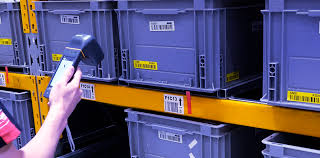
The global logistics sector is undergoing a transformative shift as RFID logistic labels emerge as the cornerstone of modern supply chain management. At the recently concluded Global Logistics Expo 2025, leading technology providers showcased cutting-edge RFID solutions designed to enhance traceability, reduce operational costs, and meet stringent compliance requirements across industries such as retail, healthcare, and food logistics.
RFID Logistic Labels Revolutionize Supply Chain Efficiency

In the era of Industry 4.0,RFID labels have emerged as a cornerstone of intelligent supply chain management, asset tracking, and consumer engagement. These compact devices, embedded with microchips and antennas, enable wireless data transmission, offering unparalleled efficiency compared to traditional barcodes. From retail to healthcare, RFID labels are revolutionizing operations across diverse sectors.
RFID Fin Tag Revolutionizes Retail Inventory Management

Relying on the advantages of batch identification of multiple tags and non-contact reading, RFID technology has realized the intelligent upgrading of the entire logistics link. Among them, the RFID UHF tags and RFID UHF tire tags developed by RFID tag manufacturers for logistics scenarios have solved the pain points of package management and transportation safety respectively, becoming a key support for smart logistics.
Application of RFID Tags in Express Logistics Industry