
How to manage book archives using RFID tags
author: admin
2025-12-05

How to manage book archives using RFID tags
In an era where digital transformation is reshaping traditional industries, libraries and archives worldwide are embracing technology to streamline operations, enhance security, and elevate user experiences. By embedding RFID tags into books, documents, and storage units, institutions are achieving unprecedented levels of automation, accuracy, and real-time visibility across their collections.
Inventory Management:
RFID handheld scanners or smart shelves can inventory thousands of items in minutes, compared to hours or days with barcodes. For instance, Shenzhen Library in China developed an RFID-powered system that completes annual inventories of over 1 million books in a single day using eight portable devices. The system generates location-based reports, identifying misplaced or missing items with pinpoint accuracy.
Self-Service Automation:
Patrons can now borrow or return books independently via RFID kiosks, reducing queues and staff workload. The U.S. Jefferson National Public Library, for example, deployed RFID tags across 1 million media items, enabling multi-item checkout in seconds. Self-service stations also integrate with security gates, automatically deactivating rfid anti-theft tags upon valid borrowing.
Real-Time Tracking & Security:
RFID antennas installed at entry/exit points and shelves monitor item movements . If an unchecked book passes through security gates, the system triggers audible alarms and captures images of the incident. The FILESGUIDE system, used in archives globally, extends this to document-level tracking, alerting administrators when files are removed without authorization.
Smart Sorting & Logistics:
Automated conveyor belts equipped with RFID readers sort returned items by genre or location, optimizing shelf restocking. Shenzhen Library’s patented RFID book conveyor, the first of its kind, handles loading and shelving tasks, freeing staff for reader services.
Conclusion: A New Chapter for Knowledge Preservation
RFID technology is redefining library and archive management, turning static collections into dynamic, interconnected ecosystems. By automating routine tasks, enhancing security, and unlocking actionable insights, institutions can focus on their core mission: fostering learning, creativity, and community engagement in the digital age.
As the technology matures, its adoption will likely become standard, much like barcodes did decades ago—but with far greater capabilities to meet the demands of a fast-paced, data-driven world.
New Engine for Industrial Intelligent Upgrade Dual Empowerment of RFID Tags and Manufacturer Technology
RFID Tag Application in Asset Management and Manufacturer Value
Related Article

Against the backdrop of accelerated urbanization and a surge in motor vehicle ownership, traditional traffic management models face pain points such as low efficiency and difficult control. Specialized tags developed by RFID tag manufacturers for traffic scenarios, such as RFID License Plate Tag and UHF windshield tags, have been deeply integrated into the entire chain of vehicle control, parking management, and public transportation scheduling.
RFID Tags Powering Smart Traffic Management Upgrade
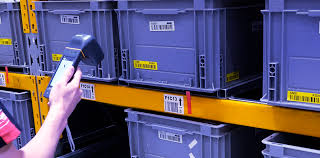
The global logistics sector is undergoing a transformative shift as RFID logistic labels emerge as the cornerstone of modern supply chain management. At the recently concluded Global Logistics Expo 2025, leading technology providers showcased cutting-edge RFID solutions designed to enhance traceability, reduce operational costs, and meet stringent compliance requirements across industries such as retail, healthcare, and food logistics.
RFID Logistic Labels Revolutionize Supply Chain Efficiency

In the era of Industry 4.0,RFID labels have emerged as a cornerstone of intelligent supply chain management, asset tracking, and consumer engagement. These compact devices, embedded with microchips and antennas, enable wireless data transmission, offering unparalleled efficiency compared to traditional barcodes. From retail to healthcare, RFID labels are revolutionizing operations across diverse sectors.
RFID Fin Tag Revolutionizes Retail Inventory Management

Relying on the advantages of batch identification of multiple tags and non-contact reading, RFID technology has realized the intelligent upgrading of the entire logistics link. Among them, the RFID UHF tags and RFID UHF tire tags developed by RFID tag manufacturers for logistics scenarios have solved the pain points of package management and transportation safety respectively, becoming a key support for smart logistics.
Application of RFID Tags in Express Logistics Industry