
How Eyewear Factories Leverage RFID Tags for Enhanced Management
author: admin
2025-11-06
How Eyewear Factories Leverage RFID Tags for Enhanced Management
In the competitive eyewear manufacturing sector, traditional inventory tracking and production management methods often struggle with inefficiencies, such as delayed stock updates and misplaced frames. To address these challenges, leading eyewear factories are adopting RFID (Radio Frequency Identification) technology, transforming their operations with real-time visibility and streamlined workflows.
Real-Time rfid Inventory Tracking with RFID Tags
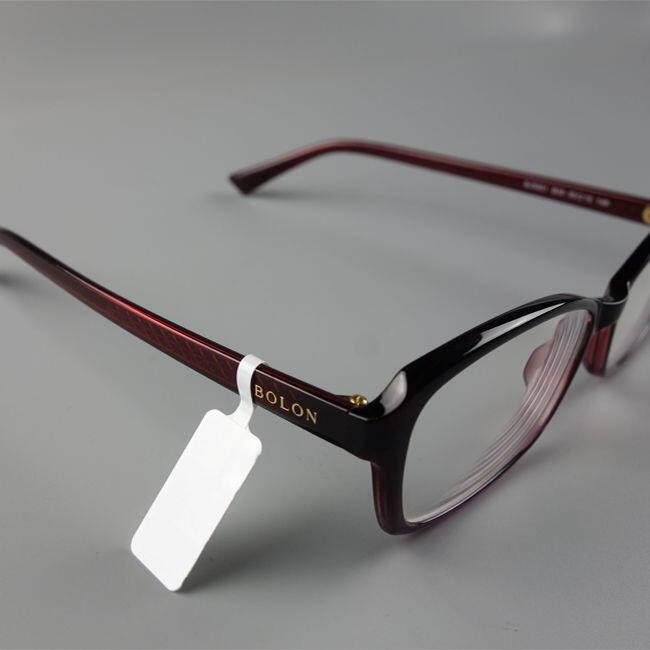
Eyewear factories are embedding UHF tags into each frame during production. These tags, which cost as low as $0.15 each, store unique identifiers linked to the frame’s model, color, size, and production batch. For example, Frame Source Group (FSG), a U.S.-based supplier serving 1,600 retailers, uses RFID-enabled systems to track thousands of frames daily. Workers scan tags via handheld readers or fixed antennas, updating inventory levels in cloud-based platforms like SimplyRFID’s Pogi Server within seconds. This eliminates manual stock checks, reducing errors and ensuring accurate stock counts.
Optimizing Production Flow
RFID integration extends beyond inventory to production line management. Factories attach tags to work-in-progress (WIP) items, enabling automated tracking through each manufacturing stage. For instance, when a frame moves from lens-cutting to assembly, RFID readers at each station log the transition, creating a digital audit trail. This data helps managers identify bottlenecks—such as delays in lens fitting—and reallocate resources to maintain optimal throughput. A case study by FSG revealed that RFID adoption cut production cycle times by 30%, with fewer misrouted items.
Preventing Loss and Theft
Eyewear factories face significant losses from misplaced or stolen frames, especially high-value designer models. RFID systems act as a deterrent by enabling electronic article surveillance (EAS). Fixed antennas at exit points detect unscanned tags, triggering alarms if frames leave without proper authorization. Additionally, RFID data helps factories trace missing items. For example, if a frame marked “shipped” isn’t received by a retailer, managers can cross-reference RFID logs to pinpoint whether it was lost in transit or mislabeled during packing.
Enhancing Supplier Collaboration
RFID bridges gaps between factories and suppliers by enabling seamless data sharing. FSG’s A.I.M.S. 2.0 system allows retailers to place orders directly via RFID-tagged samples displayed in stores. When a customer selects a frame, the sample remains on display, while the order triggers automatic restocking from the factory. Suppliers, such as Luxottica, receive real-time demand signals, adjusting production schedules to prevent overstocking or shortages. This collaborative model has reduced lead times by 50% for FSG’s partners.
Cost-Effective Implementation Strategies
For smaller factories, RFID can be phased in—starting with high-value items or critical production stages—before scaling across the entire operation.
Future Innovations: Smart Packaging and Beyond
Looking ahead, eyewear factories are exploring RFID-enabled smart packaging to enhance customer experience. For example, tags could store care instructions or warranty details, accessible via smartphone scans. Norwegian retailer Extra Optical is trialing RFID in shipping labels to provide customers with real-time delivery updates, reducing “where’s my order?” inquiries by 40%. Meanwhile, advancements in anti-metal RFID tags are enabling accurate tracking of frames with metallic components, a common challenge in traditional deployments.
Conclusion
RFID technology is reshaping eyewear factory management by delivering unparalleled visibility, efficiency, and collaboration. From real-time inventory tracking to loss prevention and supplier integration, RFID systems are proving indispensable in an industry where speed and accuracy are critical. As factories continue to innovate, RFID’s role will expand, driving the next wave of digital transformation in eyewear manufacturing.
Apparel Factory Enhances Efficiency with RFID Tag Management System
Apparel Industry Achieves Precise Preference Capture and Second-Speed Checkout via RFID Tags
Related Article

Against the backdrop of accelerated urbanization and a surge in motor vehicle ownership, traditional traffic management models face pain points such as low efficiency and difficult control. Specialized tags developed by RFID tag manufacturers for traffic scenarios, such as RFID License Plate Tag and UHF windshield tags, have been deeply integrated into the entire chain of vehicle control, parking management, and public transportation scheduling.
RFID Tags Powering Smart Traffic Management Upgrade
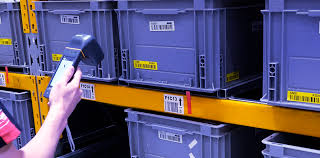
The global logistics sector is undergoing a transformative shift as RFID logistic labels emerge as the cornerstone of modern supply chain management. At the recently concluded Global Logistics Expo 2025, leading technology providers showcased cutting-edge RFID solutions designed to enhance traceability, reduce operational costs, and meet stringent compliance requirements across industries such as retail, healthcare, and food logistics.
RFID Logistic Labels Revolutionize Supply Chain Efficiency

In the era of Industry 4.0,RFID labels have emerged as a cornerstone of intelligent supply chain management, asset tracking, and consumer engagement. These compact devices, embedded with microchips and antennas, enable wireless data transmission, offering unparalleled efficiency compared to traditional barcodes. From retail to healthcare, RFID labels are revolutionizing operations across diverse sectors.
RFID Fin Tag Revolutionizes Retail Inventory Management

Relying on the advantages of batch identification of multiple tags and non-contact reading, RFID technology has realized the intelligent upgrading of the entire logistics link. Among them, the RFID UHF tags and RFID UHF tire tags developed by RFID tag manufacturers for logistics scenarios have solved the pain points of package management and transportation safety respectively, becoming a key support for smart logistics.
Application of RFID Tags in Express Logistics Industry