
Global Demand for RFID in Industrial Manufacturing Soars Amid Digital Transformation
author: admin
2025-11-28

Global Demand for RFID in Industrial Manufacturing Soars Amid Digital Transformation
As industries worldwide accelerate their digital transformation, the demand for RFID technology in industrial manufacturing has surged, driven by its ability to enhance operational efficiency, traceability, and automation. According to a recent report by Precedence Research, the global RFID market is projected to grow from USD 17.73 billion in 2025 to USD 48.51 billion by 2034, with a compound annual growth rate (CAGR) of 11.83%. The industrial manufacturing sector stands as a key contributor to this expansion, leveraging RFID for real-time asset tracking, supply chain optimization, and smart production management.
Key Drivers of Growth
Supply Chain Optimization
RFID’s non-line-of-sight, bulk-reading capabilities make it indispensable for modern supply chains. In industrial settings, RFID tags enable seamless tracking of raw materials, work-in-progress items, and finished goods across warehouses, production lines, and logistics networks. For instance, automotive RFID manufacturers use RFID to monitor parts throughout assembly processes, reducing errors and improving throughput.
Industry 4.0 and Smart Manufacturing
The integration of RFID with AI, edge computing, and 5G/6G networks is reshaping industrial automation. RFID systems now support real-time data collection, enabling predictive maintenance, dynamic inventory adjustments, and digital twin simulations. A 2025 industry analysis highlighted that RFID adoption in smart factories has cut downtime by 30% and boosted production efficiency by 25% in sectors like electronics and machinery.
Policy Support and Standardization
Governments globally are prioritizing RFID as a cornerstone of industrial modernization. China’s “Digital China Construction Plan” and the EU’s “IoT Standards Framework” have spurred investments in RFID infrastructure, particularly in UHF tags for long-range tracking. Meanwhile, quantum encryption and national cryptographic algorithms are enhancing RFID security, addressing concerns over data breaches in critical industries.
Regional Market Dynamics
• Asia-Pacific Dominates: China, Japan, and South Korea lead in RFID deployment, accounting for 45% of global market share in 2025. China’s industrial manufacturing RFID market alone is expected to reach USD 12.3 billion by 2030, fueled by state-backed smart factory initiatives.
• Europe’s Technological Edge: Germany and Spain are pioneering RFID R&D, with applications extending beyond traditional manufacturing to sectors like healthcare and agriculture. Germany’s RFID market is projected to hit USD 2.9 billion by 2034, driven by demand for process optimization in automotive and pharmaceutical supply chains.
• North America’s Retail and Logistics Boom: The U.S. remains a hub for RFID innovation, with retailers adopting the technology for inventory management and loss prevention. Amazon’s “Just Walk Out” stores, powered by RFID and computer vision, exemplify this trend.
Technological Advancements
• Miniaturization and Cost Reduction: RFID tags are becoming smaller, cheaper, and more versatile, with prices dropping to USD 0.05–0.10 per unit for high-volume orders. This has expanded their use in disposable applications, such as pharmaceutical packaging and food traceability.
• High-Frequency (HF) vs. Ultra-High-Frequency (UHF): While UHF tags dominate in volume (projected 5.3 billion units sold in 2025), HF tags capture 60% of market value due to their role in secure payments, access control, and high-value asset tracking.
• Emerging Frontiers: Quantum-dot sensors and terahertz (THz) communication are pushing RFID into new realms, such as smart agriculture (soil monitoring) and environmental sustainability (waste recycling).
Industry Challenges and Outlook
Despite its promise, RFID adoption faces hurdles, including interoperability issues, high initial costs for SMEs, and data privacy concerns. However, industry experts predict these challenges will diminish as standards mature and cloud-based RFID solutions gain traction.
“By 2030, RFID will be embedded in 90% of industrial IoT deployments,” said Dr. Li Wei, a senior analyst at IDTechEx. “Its role in enabling autonomous supply chains and circular economies will be transformative.”
As industries strive for zero-defect manufacturing and carbon neutrality, RFID’s ability to deliver granular visibility and automation positions it as an essential technology for the next decade.
RFID Tags Empower Multi Industry Intelligence
RFID Tags Reshape Supermarket Operations and Boost Digital Intelligent Transformation
Related Article

Against the backdrop of accelerated urbanization and a surge in motor vehicle ownership, traditional traffic management models face pain points such as low efficiency and difficult control. Specialized tags developed by RFID tag manufacturers for traffic scenarios, such as RFID License Plate Tag and UHF windshield tags, have been deeply integrated into the entire chain of vehicle control, parking management, and public transportation scheduling.
RFID Tags Powering Smart Traffic Management Upgrade
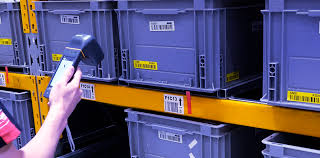
The global logistics sector is undergoing a transformative shift as RFID logistic labels emerge as the cornerstone of modern supply chain management. At the recently concluded Global Logistics Expo 2025, leading technology providers showcased cutting-edge RFID solutions designed to enhance traceability, reduce operational costs, and meet stringent compliance requirements across industries such as retail, healthcare, and food logistics.
RFID Logistic Labels Revolutionize Supply Chain Efficiency

In the era of Industry 4.0,RFID labels have emerged as a cornerstone of intelligent supply chain management, asset tracking, and consumer engagement. These compact devices, embedded with microchips and antennas, enable wireless data transmission, offering unparalleled efficiency compared to traditional barcodes. From retail to healthcare, RFID labels are revolutionizing operations across diverse sectors.
RFID Fin Tag Revolutionizes Retail Inventory Management

Relying on the advantages of batch identification of multiple tags and non-contact reading, RFID technology has realized the intelligent upgrading of the entire logistics link. Among them, the RFID UHF tags and RFID UHF tire tags developed by RFID tag manufacturers for logistics scenarios have solved the pain points of package management and transportation safety respectively, becoming a key support for smart logistics.
Application of RFID Tags in Express Logistics Industry