
5 Things You Must Know About RFID Tags
author: admin
2025-11-20

5 Things You Must Know About RFID Tags
IIn the era of digital transformation, RFID (Radio Frequency Identification) technology has emerged as a cornerstone for enhancing operational efficiency across industries. From retail and logistics to healthcare and manufacturing, RFID tags are revolutionizing how businesses track and manage assets. Here are five essential insights into RFID tags that you need to know:
1. Core Components and Working Principle
RFID tags, also known as rfid smart tags or electronic labels, consist of three main components: an antenna, a chip, and a power source (in some cases). The antenna captures radio waves from an RFID reader, converting them into electrical energy to power the chip. The chip stores unique identification data and communicates with the reader via radio frequency signals.
RFID systems operate in two primary modes: passive and active. Passive tags, which lack an internal battery, derive power from the reader's electromagnetic field, making them cost-effective and suitable for short-range applications. Active tags, equipped with batteries, can transmit signals over longer distances and support advanced features like real-time tracking.
2. Diverse Types and Applications
RFID tags come in various types, each tailored to specific use cases:
• Low-Frequency (LF) Tags: Operating at 125-134 kHz, LF tags excel in environments with high moisture or metal interference, such as animal tracking and access control systems.
• High-Frequency (HF) Tags: With a frequency of 13.56 MHz, HF tags are widely used in payment systems (e.g., contactless credit cards), library management, and ticketing.
• Ultra-High-Frequency (UHF) Tags: Operating in the 860-960 MHz range, UHF tags offer long-range readability (up to 10 meters or more) and are ideal for inventory management, supply chain tracking, and asset monitoring.
Each type finds applications in sectors like retail (inventory tracking), healthcare (medical device management), logistics (cargo monitoring), and automotive (vehicle identification).
3. Advantages Over Traditional Barcodes
RFID tags offer several advantages over traditional barcodes:
• Non-Line-of-Sight Reading: Unlike barcodes, which require direct line-of-sight scanning, RFID tags can be read through materials like plastic, wood, and even non-metallic walls.
• Multi-Tag Reading: RFID readers can simultaneously capture data from multiple tags, significantly speeding up inventory checks and asset audits.
• Data Capacity and Security: RFID tags can store vast amounts of data (up to several megabytes) and support encryption, enhancing security and enabling complex tracking systems.
• Durability: Resistant to water, dust, and extreme temperatures, RFID labels are more robust than fragile barcodes, ensuring reliable performance in harsh environments.
4. Market Growth and Industry Trends
The global RFID tag market is experiencing robust growth, driven by increasing demand across sectors. According to recent market research, the global high-frequency and ultra-high-frequency RFID tag market is projected to reach $35.56 billion by 2031, growing at a compound annual growth rate (CAGR) of 12.9% from 2025 to 2031.
Key trends shaping the market include:
• Customization: Businesses are seeking RFID tags tailored to specific applications, such as anti-metal tags for industrial equipment and temperature-sensitive tags for cold chain logistics.
• Cost Reduction: Advances in manufacturing and economies of scale are driving down the cost of RFID tags, making them more accessible to small and medium-sized enterprises.
• Integration with IoT and AI: RFID technology is increasingly being integrated with the Internet of Things (IoT) and artificial intelligence (AI) to enable real-time data analytics and predictive maintenance.
5. Challenges and Considerations
Despite their benefits, RFID tags face challenges that businesses must address:
• Interference and Range Limitations: Metal objects and liquids can interfere with RFID signals, affecting read accuracy. Selecting the right tag type and reader placement is crucial.
• Security Risks: Unauthorized access to RFID data can lead to privacy breaches and counterfeiting. Implementing robust encryption and access control measures is essential.
• Standardization: The lack of global standards for RFID frequencies and protocols can complicate cross-border operations. Adopting widely recognized standards like EPCglobal can mitigate this issue.
In conclusion, UHF RFID tags are transforming industries by enabling efficient, accurate, and secure asset tracking. By understanding their core components, types, advantages, market trends, and challenges, businesses can leverage RFID technology to gain a competitive edge in today's fast-paced digital landscape.
Application of RFID UHF High-Protecting On-Metal Tag on Railway Tracks
UHF LED lighting RFID labels for items Localization
Related Article
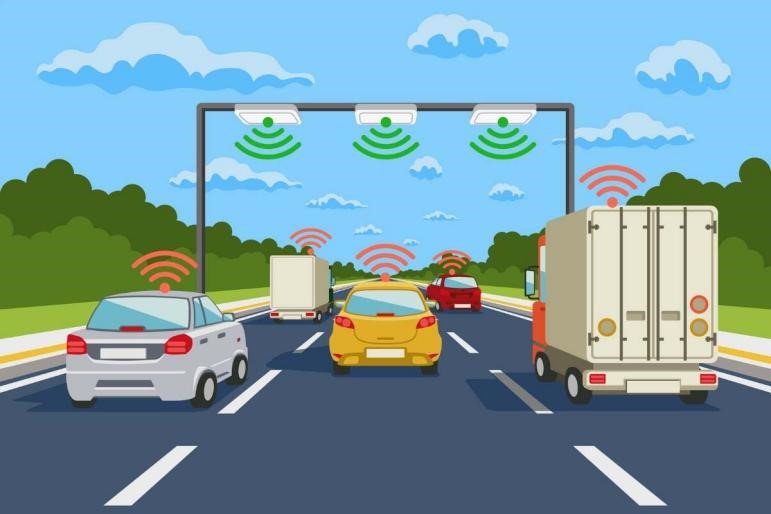
Against the backdrop of accelerated urbanization and a surge in motor vehicle ownership, traditional traffic management models face pain points such as low efficiency and difficult control. Specialized tags developed by RFID tag manufacturers for traffic scenarios, such as RFID License Plate Tag and UHF windshield tags, have been deeply integrated into the entire chain of vehicle control, parking management, and public transportation scheduling.
RFID Tags Powering Smart Traffic Management Upgrade
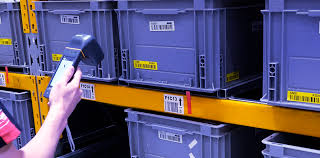
The global logistics sector is undergoing a transformative shift as RFID logistic labels emerge as the cornerstone of modern supply chain management. At the recently concluded Global Logistics Expo 2025, leading technology providers showcased cutting-edge RFID solutions designed to enhance traceability, reduce operational costs, and meet stringent compliance requirements across industries such as retail, healthcare, and food logistics.
RFID Logistic Labels Revolutionize Supply Chain Efficiency

In the era of Industry 4.0,RFID labels have emerged as a cornerstone of intelligent supply chain management, asset tracking, and consumer engagement. These compact devices, embedded with microchips and antennas, enable wireless data transmission, offering unparalleled efficiency compared to traditional barcodes. From retail to healthcare, RFID labels are revolutionizing operations across diverse sectors.
RFID Fin Tag Revolutionizes Retail Inventory Management

Relying on the advantages of batch identification of multiple tags and non-contact reading, RFID technology has realized the intelligent upgrading of the entire logistics link. Among them, the RFID UHF tags and RFID UHF tire tags developed by RFID tag manufacturers for logistics scenarios have solved the pain points of package management and transportation safety respectively, becoming a key support for smart logistics.
Application of RFID Tags in Express Logistics Industry