
RFID Empowers the Food Industry Upgrade from Safety Supervision to Consumer Trust
author: admin
2025-10-14

RFID Empowers the Food Industry Upgrade from Safety Supervision to Consumer Trust
In the food safety management system, RFID (Radio Frequency Identification) tags, with the core advantages of non-contact data reading, large-capacity information storage, and real-time dynamic tracking, have become a key technical means to solve the problem of full-link supervision from "farm to table". Their specific applications focus on three core scenarios:
First, full-process traceability in the supply chain. From the cultivation of agricultural products (such as vegetables and fruits), livestock and poultry breeding to food processing and distribution, RFID tags can be pre-written with key data such as origin information, agricultural records (e.g., pesticide use time and dosage), processing dates, and quality inspection reports. During transportation and warehousing, the data is automatically collected by readers and uploaded to the cloud platform. Consumers only need to scan the terminal to query the complete traceability path, effectively avoiding problems such as source pollution and information fraud.
Second, cold chain temperature and humidity monitoring. For temperature-sensitive foods like fresh meat, dairy products, and vaccines, RFID tags with sensor functions can collect real-time environmental temperature and humidity data 24 hours a day. Once the data exceeds the safe range (e.g., 0-4℃), the system will immediately trigger an audible and visual alarm to prevent food spoilage caused by cold chain breakage.
Third, anti-counterfeiting and anti-tampering. The unique electronic code of RFID tags is non-replicable, which can effectively prevent counterfeit and shoddy foods (such as counterfeit imported red wine and refurbished expired foods) from entering the market, and effectively protect consumers' health rights.
In the field of RFID sticker manufacturers, domestic and foreign enterprises show a pattern of differentiated competition, with product R&D directions highly matching application scenarios. Representative domestic enterprises such as Huawei IoT have launched food-grade UHF (Ultra-High Frequency) RFID tags made of food-contact low-temperature-resistant materials, which can adapt to extreme cold chain environments from -30℃ to 50℃ and fully comply with the national food safety standard GB 4806.1-2016. Currently, they have been widely used in the cold chain traceability of domestic dairy products. ZTE IoT focuses on the R&D of low-cost UHF tags, with product design emphasizing compatibility and batch applicability, especially suitable for the full-link traceability needs of bulk agricultural products such as rice and wheat.
Among foreign manufacturers, the HF (High-Frequency) NFC RFID tags of Impinj (USA) take a reading accuracy of 99.9% as their core advantage, supporting close-range accurate identification. Their technical characteristics match the refined traceability needs of high-end foods such as organic beef and imported chocolate. The enhanced UHF tags of Alien Technology (UK) focus on an ultra-long reading distance of 10 meters, with hardware design adapted to batch inventory and dynamic inventory management in large food storage centers, which can improve the efficiency of information collection in the warehousing link.
What Are the Advantages of Printable Laundry tag
RFID Tags Reshape the New Ecology of Medical Drug Inventory Management
Related Article
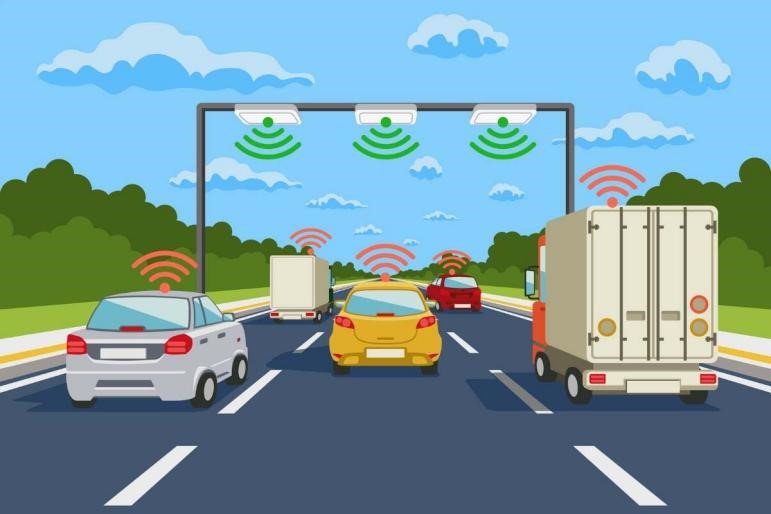
Against the backdrop of accelerated urbanization and a surge in motor vehicle ownership, traditional traffic management models face pain points such as low efficiency and difficult control. Specialized tags developed by RFID tag manufacturers for traffic scenarios, such as RFID License Plate Tag and UHF windshield tags, have been deeply integrated into the entire chain of vehicle control, parking management, and public transportation scheduling.
RFID Tags Powering Smart Traffic Management Upgrade
The global logistics sector is undergoing a transformative shift as RFID logistic labels emerge as the cornerstone of modern supply chain management. At the recently concluded Global Logistics Expo 2025, leading technology providers showcased cutting-edge RFID solutions designed to enhance traceability, reduce operational costs, and meet stringent compliance requirements across industries such as retail, healthcare, and food logistics.
RFID Logistic Labels Revolutionize Supply Chain Efficiency

In the era of Industry 4.0,RFID labels have emerged as a cornerstone of intelligent supply chain management, asset tracking, and consumer engagement. These compact devices, embedded with microchips and antennas, enable wireless data transmission, offering unparalleled efficiency compared to traditional barcodes. From retail to healthcare, RFID labels are revolutionizing operations across diverse sectors.
RFID Fin Tag Revolutionizes Retail Inventory Management
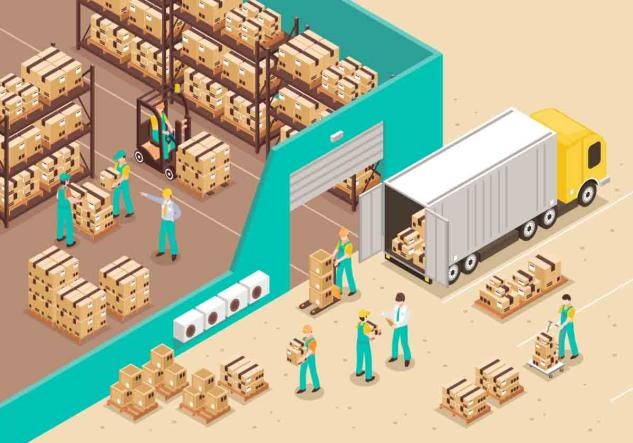
Relying on the advantages of batch identification of multiple tags and non-contact reading, RFID technology has realized the intelligent upgrading of the entire logistics link. Among them, the RFID UHF tags and RFID UHF tire tags developed by RFID tag manufacturers for logistics scenarios have solved the pain points of package management and transportation safety respectively, becoming a key support for smart logistics.
Application of RFID Tags in Express Logistics Industry