
Customized RFID Tag Development Sets New Standards for Smart Ports
author: admin
2025-08-11

Customized RFID Tag Development Sets New Standards for Smart Ports
Radio Frequency Identification (RFID) technology demonstrating significant potential in port vehicle management. As logistics hubs, ports handle a large number of container trucks, trailers, and engineering vehicles daily, where traditional manual management methods prove inefficient and error-prone. RFID tag manufacturers have provided many new solutions by customising RFID tags for various usage scenarios.
1. Automatic Vehicle Identification and Rapid Access Control
By installing RFID readers at port entry/exit points and equipping each authorized vehicle with RFID tags, contactless automatic identification can be achieved. When vehicles approach checkpoints, the system completes identity verification within milliseconds, improving throughput efficiency by 5-10 times compared to manual checks. This effectively alleviates congestion during peak hours.
2. Precise Positioning and Trajectory Tracking
Through deploying RFID reader networks in key port areas, real-time vehicle location information can be obtained. Integrated with Geographic Information Systems (GIS), managers can visually monitor vehicle distribution and movement patterns on digital maps. The system automatically alerts for abnormal parking or route deviations, enhancing safety supervision.
3. Automated Operational Processes
When integrated with port operating systems, RFID enables automated dispatching for loading/unloading operations. Vehicles with RFID UHF windshield tags arriving at designated work areas trigger automatic allocation of equipment and personnel, reducing waiting time. The system automatically records operation start/end times, providing data support for performance evaluation.
4. Intelligent Maintenance Management
RFID UHF Tire tags can store vehicle maintenance records and inspection data. The system automatically reminds service schedules, preventing mechanical failures due to oversight. Technicians can access complete repair history by scanning UHF RFID tags, improving maintenance efficiency. Additionally, it monitors vehicle utilization rates to optimize resource allocation.
5. Enhanced Security and Access Control
RFID enables hierarchical permission management with precise vehicle-level access control for different zones. Hazardous material transport vehicles can be automatically guided to dedicated lanes and parking areas. It effectively identifies and blocks unauthorized vehicles from restricted areas, improving security.
6. Data Integration and Analytics
The massive operational data generated by RFID systems can interface with Port Management Information Systems (MIS) and Enterprise Resource Planning (ERP) platforms. Through big data analytics, it optimizes vehicle dispatching, predicts equipment failures, and provides decision-making support for port expansion planning.
The implementation of RFID technology transforms traditional port vehicle management into an intelligent, data-driven operation, significantly improving efficiency, safety, and resource utilization while reducing operational costs.
How RFID Technology is Reshaping the Future of the Textile Industry with RFID UHF laundry tag
RFID Tags Revolutionize Efficiency in the Automotive Industry
Related Article
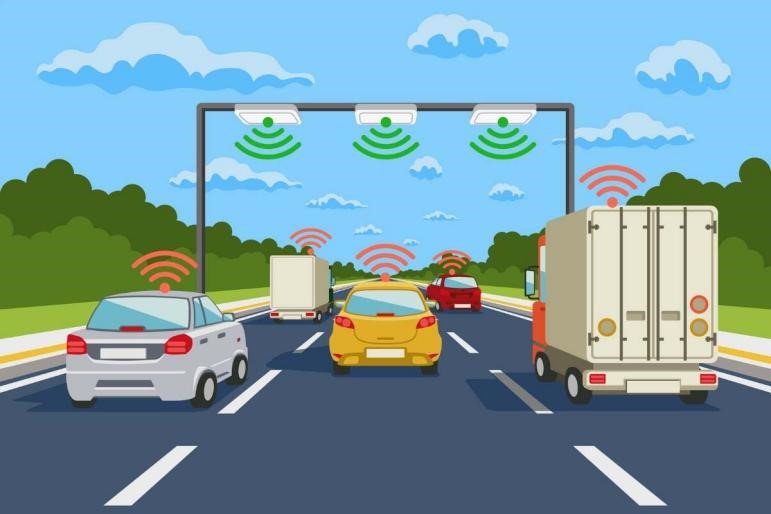
Against the backdrop of accelerated urbanization and a surge in motor vehicle ownership, traditional traffic management models face pain points such as low efficiency and difficult control. Specialized tags developed by RFID tag manufacturers for traffic scenarios, such as RFID License Plate Tag and UHF windshield tags, have been deeply integrated into the entire chain of vehicle control, parking management, and public transportation scheduling.
RFID Tags Powering Smart Traffic Management Upgrade
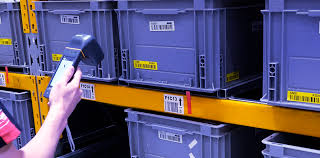
The global logistics sector is undergoing a transformative shift as RFID logistic labels emerge as the cornerstone of modern supply chain management. At the recently concluded Global Logistics Expo 2025, leading technology providers showcased cutting-edge RFID solutions designed to enhance traceability, reduce operational costs, and meet stringent compliance requirements across industries such as retail, healthcare, and food logistics.
RFID Logistic Labels Revolutionize Supply Chain Efficiency

In the era of Industry 4.0,RFID labels have emerged as a cornerstone of intelligent supply chain management, asset tracking, and consumer engagement. These compact devices, embedded with microchips and antennas, enable wireless data transmission, offering unparalleled efficiency compared to traditional barcodes. From retail to healthcare, RFID labels are revolutionizing operations across diverse sectors.
RFID Fin Tag Revolutionizes Retail Inventory Management

Relying on the advantages of batch identification of multiple tags and non-contact reading, RFID technology has realized the intelligent upgrading of the entire logistics link. Among them, the RFID UHF tags and RFID UHF tire tags developed by RFID tag manufacturers for logistics scenarios have solved the pain points of package management and transportation safety respectively, becoming a key support for smart logistics.
Application of RFID Tags in Express Logistics Industry