
RFID Tire Tags Revolutionize Tire Management Across Supply Chains
author: admin
2025-11-04
RFID Tire Tags Revolutionize Tire Management Across Supply Chains
In an era where efficiency and traceability are paramount, RFID is transforming tire management across manufacturing, logistics, and end-user operations. By embedding or attaching RFID tags to tires, stakeholders can now achieve real-time visibility, automated data collection, and end-to-end lifecycle tracking—from production to recycling.
How RFID Tire Tags Work
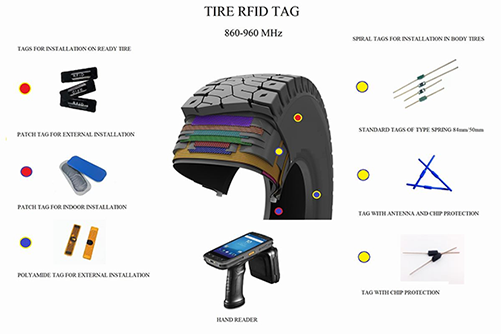
RFID tire tags are small, durable electronic devices that store unique identification data, such as tire model, production date, batch number, and manufacturer details. These tags operate under extreme conditions, including high temperatures, pressure, and chemical exposure, ensuring reliability throughout a tire’s lifespan.
Three primary installation methods exist:
Embedded Tags: Integrated into the tire during vulcanization for maximum protection and longevity.
Surface-Attached Tags: Affixed to the tire’s exterior for easier installation but slightly lower durability.
Inner-Layer Tags: Positioned between tire layers, balancing protection and accessibility.
Key Applications Driving Industry Transformation
1. Production & Quality Control
During manufacturing, RFID UHF tags enable automated tracking of each tire’s journey through production lines. For instance, a European tire distributor used RFID-equipped tags to coordinate warehouse logistics during peak sales seasons, reducing lost shipments by 40%. By scanning tags at each stage, RFID tag manufacturers can monitor quality, detect defects early, and streamline workflows.
2. Warehouse & Inventory Management
RFID technology eliminates manual stock checks. Handheld readers can instantly scan hundreds of tires, capturing data such as production dates, batch numbers, and storage locations. This automation reduces human error, prevents overstocking or shortages, and cuts labor costs. A Chinese tire manufacturer reported a 30% reduction in inventory management time after adopting RFID systems.
3. Logistics & Supply Chain Traceability
In transit, RFID tag labels provide real-time location and status updates. For example, Michelin’s partnership with Murata introduced Generation 4 RFID tags that integrate with IoT platforms, enabling stakeholders to track tires globally. This ensures timely deliveries, reduces theft, and combats counterfeit products—a critical issue for premium brands.
4. Vehicle Safety & Maintenance
When paired with TPMS (Tire Pressure Monitoring Systems), RFID tags transmit live data on tire pressure, temperature, and tread wear to drivers or fleet managers. This proactive approach prevents accidents caused by underinflated or worn tires. A U.S. fleet operator reduced tire-related breakdowns by 25% using RFID-enabled maintenance alerts.
5. After-Sales Service & Recycling
RFID tags simplify warranty claims and recycling processes. By scanning a tire RFID tag, service centers can verify its history, authenticate claims, and determine recyclability. In the UK, a government-backed project used low-cost RFID tags to track 60 million discarded tires annually, optimizing recycling routes and reducing environmental impact.
Global Standards Ensure Interoperability
To standardize RFID tire technology, four ISO international standards were established in 2020, covering tag specifications, coding, attachment methods, and testing protocols. These guidelines, led by Chinese experts and adopted globally, ensure compatibility across manufacturers and regions, fostering industry-wide adoption.
The Future of Smart Tires
As RFID technology evolves, its integration with AI and big data analytics promises even greater insights. Imagine tires that self-diagnose issues, predict maintenance needs, or adjust performance based on road conditions. Companies like Continental and Bridgestone are already exploring such innovations, positioning RFID as the backbone of next-generation “smart tires.”
Conclusion
RFID tire label are no longer a niche solution—they’re a game-changer for an industry grappling with complexity and sustainability challenges. By enabling seamless data flow and automation, this technology is driving efficiency, safety, and profitability across the tire value chain. As adoption grows, the vision of a fully connected, transparent tire ecosystem is fast becoming reality.
Conclusion
RFID tire label are no longer a niche solution—they’re a game-changer for an industry grappling with complexity and sustainability challenges. By enabling seamless data flow and automation, this technology is driving efficiency, safety, and profitability across the tire value chain. As adoption grows, the vision of a fully connected, transparent tire ecosystem is fast becoming reality.
How is RFID used for ETC
RFID Tags Closing the Traceability Loop for Materials and Process Operations in Production
Related Article

Against the backdrop of accelerated urbanization and a surge in motor vehicle ownership, traditional traffic management models face pain points such as low efficiency and difficult control. Specialized tags developed by RFID tag manufacturers for traffic scenarios, such as RFID License Plate Tag and UHF windshield tags, have been deeply integrated into the entire chain of vehicle control, parking management, and public transportation scheduling.
RFID Tags Powering Smart Traffic Management Upgrade
The global logistics sector is undergoing a transformative shift as RFID logistic labels emerge as the cornerstone of modern supply chain management. At the recently concluded Global Logistics Expo 2025, leading technology providers showcased cutting-edge RFID solutions designed to enhance traceability, reduce operational costs, and meet stringent compliance requirements across industries such as retail, healthcare, and food logistics.
RFID Logistic Labels Revolutionize Supply Chain Efficiency

In the era of Industry 4.0,RFID labels have emerged as a cornerstone of intelligent supply chain management, asset tracking, and consumer engagement. These compact devices, embedded with microchips and antennas, enable wireless data transmission, offering unparalleled efficiency compared to traditional barcodes. From retail to healthcare, RFID labels are revolutionizing operations across diverse sectors.
RFID Fin Tag Revolutionizes Retail Inventory Management

Relying on the advantages of batch identification of multiple tags and non-contact reading, RFID technology has realized the intelligent upgrading of the entire logistics link. Among them, the RFID UHF tags and RFID UHF tire tags developed by RFID tag manufacturers for logistics scenarios have solved the pain points of package management and transportation safety respectively, becoming a key support for smart logistics.
Application of RFID Tags in Express Logistics Industry