
Apparel Industry Achieves Precise Preference Capture and Second-Speed Checkout via RFID Tags
author: admin
2025-11-06
Apparel Industry Achieves Precise Preference Capture and Second-Speed Checkout via RFID Tags
In the wave of digital transformation in the apparel industry, RFID (Radio Frequency Identification) technology is moving from the background to the foreground. With its advantages of non-contact identification and large data storage capacity, it has completely changed the traditional apparel retail dilemma of "heavy inventory and light experience". Among them, RFID tags not only accurately record consumer preferences and optimize brand decisions but also enable "second-level checkout". As the core force for technology implementation, RFID Tag manufacturer provides key hardware support for this series of transformations.
1. Accurately Capturing Consumer Preferences, Making "On-Demand Production" Possible
The traditional apparel industry often relies on sales data to infer consumer demand, which is lagging and one-sided. However, UHF clothing tags can collect demand information from the entire consumer chain, allowing brands to truly "understand" consumers.
Fitting data tracking: After installing UHF RFID readers in store fitting rooms, the RFID tag on each garment automatically records the number of fittings, fitting duration, and whether the garment is purchased after fitting. For example, if a dress is tried on 10 times but only sold twice, the brand can analyze whether there are issues with the version, size, or matching; if it is sold out after 5 fittings, it indicates that this style has potential for hot sales, and inventory can be replenished in a timely manner.
Consumer preference association: RFID tags can be bound to the consumer membership system. When a consumer selects clothing through an intelligent clothes hanger with RFID identification function, the system automatically records the style, color, and size they browsed and synchronizes it to the database. After long-term accumulation, the brand can generate personalized recommendations, such as pushing new sweaters to consumers who like casual styles and prioritizing showing suitable sizes to users who often buy plus-size clothing, significantly increasing the repurchase rate.
Omni-channel demand integration: Whether it is fitting records in offline stores or browsing and cart-adding data in online malls, all can be integrated into the cloud through the unique code associated with the RFID tag. Based on this data, brands adjust design directions and production rhythms, effectively reducing the contradiction between "inventory backlog" and "out-of-stock hot styles".
2. Upgrading Fast Checkout Experience, Solving the "Queuing Pain Point" in Retail
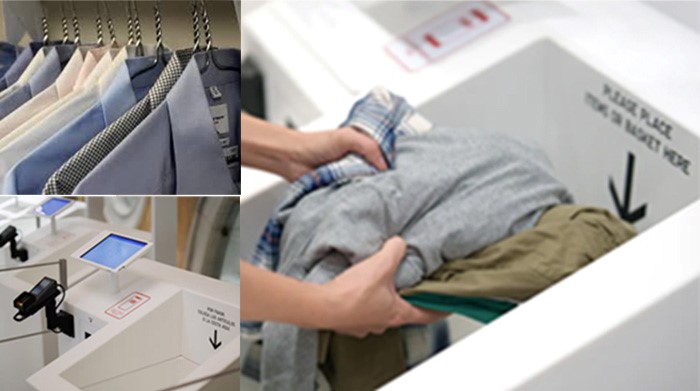
Traditional apparel checkout requires scanning product barcodes one by one. If a consumer buys multiple garments, the queuing time often exceeds 10 minutes. However, the batch identification capability of RFID UHF clothing tags makes fast checkout of "grabbing the bag and leaving" a reality.
Second-level batch identification: Consumers do not need to sort out multiple selected garments one by one. They only need to place the shopping basket with clothes on the RFID checkout counter. The system can identify the information of all products (including name, price, size) within 1-2 seconds and automatically generate a bill. Compared with traditional barcode scanning checkout, the efficiency is improved by more than 80%, which can significantly reduce queuing time especially during peak passenger flow on holidays.
Anti-theft and inventory linkage: RFID garment tags have built-in anti-theft functions. If unpaid garments are taken out of the store, the RFID identification door at the exit will automatically alarm; at the same time, every time a checkout is completed, the system will deduct the inventory of the corresponding product in real time, ensuring the synchronization of online and offline inventory data and avoiding the situation where consumers find "out of stock offline" after placing an order.
Self-checkout extension: Some brands also combine RFID technology with self-checkout machines. Consumers can complete the processes of scanning codes, paying, and taking bags independently without the assistance of staff, further reducing the labor cost of stores and improving consumption autonomy.
3. RFID Tag manufacturer: The "Core Partner" for Technology Implementation
The apparel industry has special requirements for RFID tags - they need to withstand washing and friction (during garment wearing and washing), be small in size, and cost-controllable. This is inseparable from the technological innovation and customized services of RFID Tag manufacturer.
Customized tag design: Manufacturers can adjust tag materials according to garment materials (such as cotton, chemical fiber, leather) to produce flexible and wash-resistant RFID tags, avoiding tags affecting the wearing experience of garments; at the same time, tags can be embedded in garment hangtags or seams to achieve "invisible" integration.
Balance between cost and stability: For fast fashion brands with "high-frequency new arrivals and low-cost needs", manufacturers reduce the unit price of tags through large-scale production; for high-end apparel brands with "data security needs", they provide encrypted RFID tags to prevent product information from being tampered with or leaked.
Customized tag design: Manufacturers can adjust tag materials according to garment materials (such as cotton, chemical fiber, leather) to produce flexible and wash-resistant RFID tags, avoiding tags affecting the wearing experience of garments; at the same time, tags can be embedded in garment hangtags or seams to achieve "invisible" integration.
Balance between cost and stability: For fast fashion brands with "high-frequency new arrivals and low-cost needs", manufacturers reduce the unit price of tags through large-scale production; for high-end apparel brands with "data security needs", they provide encrypted RFID tags to prevent product information from being tampered with or leaked.
Whole-industry chain collaboration: RFID Tag manufacturer not only provides hardware but also cooperates with apparel brands and system integrators to connect the whole chain of "tag coding - data collection - cloud analysis", ensuring that RFID technology is seamlessly connected with the brand's existing ERP (Enterprise Resource Planning) system and membership system, and truly exerting data value.
From capturing consumer demand to optimizing checkout experience, RFID tags are redefining the operation logic of the apparel industry. And RFID Tag manufacturer, through continuous technological iteration, provides apparel brands with solutions with stronger adaptability and better cost-effectiveness, becoming an important force promoting the digital transformation of the industry. In the future, with the in-depth integration of RFID technology with AI and big data, the apparel industry will realize a new model of "accurate demand prediction and seamless experience connection", further narrowing the distance between brands and consumers.
How Eyewear Factories Leverage RFID Tags for Enhanced Management
RFID Tags Solve EV Management Pain Points Manufacturer Tech Supports Production Charging Anti-Theft
Related Article
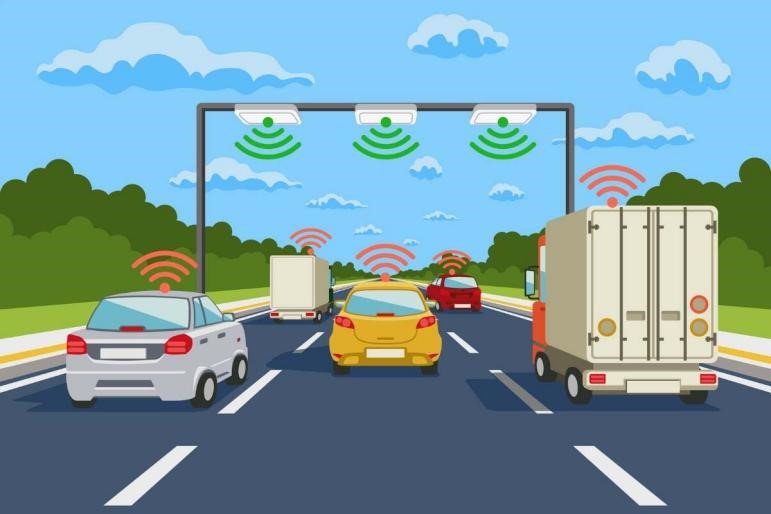
Against the backdrop of accelerated urbanization and a surge in motor vehicle ownership, traditional traffic management models face pain points such as low efficiency and difficult control. Specialized tags developed by RFID tag manufacturers for traffic scenarios, such as RFID License Plate Tag and UHF windshield tags, have been deeply integrated into the entire chain of vehicle control, parking management, and public transportation scheduling.
RFID Tags Powering Smart Traffic Management Upgrade
The global logistics sector is undergoing a transformative shift as RFID logistic labels emerge as the cornerstone of modern supply chain management. At the recently concluded Global Logistics Expo 2025, leading technology providers showcased cutting-edge RFID solutions designed to enhance traceability, reduce operational costs, and meet stringent compliance requirements across industries such as retail, healthcare, and food logistics.
RFID Logistic Labels Revolutionize Supply Chain Efficiency

In the era of Industry 4.0,RFID labels have emerged as a cornerstone of intelligent supply chain management, asset tracking, and consumer engagement. These compact devices, embedded with microchips and antennas, enable wireless data transmission, offering unparalleled efficiency compared to traditional barcodes. From retail to healthcare, RFID labels are revolutionizing operations across diverse sectors.
RFID Fin Tag Revolutionizes Retail Inventory Management
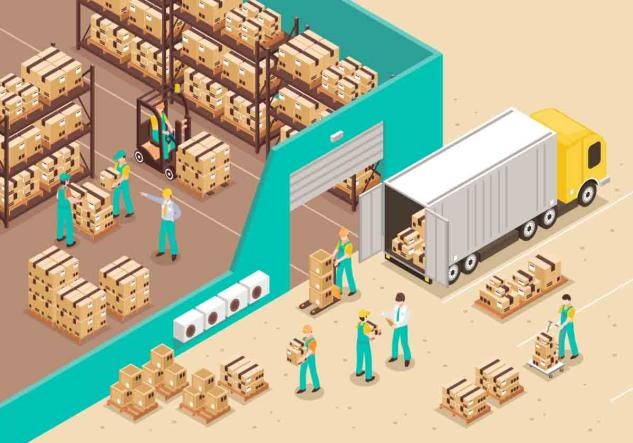
Relying on the advantages of batch identification of multiple tags and non-contact reading, RFID technology has realized the intelligent upgrading of the entire logistics link. Among them, the RFID UHF tags and RFID UHF tire tags developed by RFID tag manufacturers for logistics scenarios have solved the pain points of package management and transportation safety respectively, becoming a key support for smart logistics.
Application of RFID Tags in Express Logistics Industry