
Intelligent Innovation of Red Wine Management RFID Tags Become Core Engine
author: admin
2025-10-22

Intelligent Innovation of Red Wine Management RFID Tags Become Core Engine
In the red wine industry, the management accuracy of every link—from grape picking in vineyards, brewing and bottling, to warehousing, transportation, and terminal retail—directly affects product quality and market trust. The traditional management model relying on manual records and barcode scanning has pain points such as traceability gaps, low inventory counting efficiency, and weak anti-counterfeiting capabilities. However, RFID (Radio Frequency Identification) technology, with its advantages of non-contact reading, simultaneous identification of multiple tags, and large data storage capacity, has become a key tool for the digital transformation of the red wine industry. Among them, UHF Flag Tags, UHF Liquid-Resistant Tags, and RFID NFC Tags target different scenarios of red wine management, and together with technical support from professional RFID tag manufacturers, they build an intelligent management system covering the entire life cycle of red wine.
UHF Flag Tags: The Efficiency Engine for Warehousing and Transportation
UHF Flag Tags, with their unique "flag-shaped" design, are ideal for inventory counting in red wine warehouses and tracking during transportation. Their tag body is separated from the antenna, allowing flexible attachment to irregular surfaces such as red wine bottle necks and gaps in packaging boxes. The UHF frequency band (ultra-high frequency, 860-960MHz) supports long-distance reading of 3-10 meters, enabling batch identification of entire cases or pallets of red wine.
In practical applications, warehouse managers do not need to unpack; they can collect information from dozens of cases of red wine within seconds using a UHF handheld terminal or fixed reader, increasing the efficiency of traditional manual counting by more than 10 times. Meanwhile, the tags can store data such as production date, batch number, and storage temperature and humidity requirements. During transportation, real-time tracking of cargo location and environmental changes is possible through readers deployed along the route, avoiding quality loss caused by transportation delays or abnormal temperature and humidity. For example, after some wineries in Bordeaux, France, adopted UHF Flag Tags, the loss rate of red wine during intercontinental transportation dropped from 5% to 1.2%, and the inventory turnover cycle was shortened by 20%.
UHF Anti-Liquid Tags: A Durable Solution for Direct Contact with Wine
Red wine bottles are in direct contact with wine and condensed water. Ordinary RFID tags are prone to signal attenuation due to liquid interference, or even damage due to moisture. UHF Liquid-Resistant Tags solve the problem of liquid shielding radio frequency signals through special packaging materials (such as alcohol-resistant PET film, waterproof epoxy resin) and antenna design. They can be directly pasted on the outer side of red wine bottles or even embedded in the bottle bottom, realizing precise "one bottle, one code" management.
In the brewing and bottling process, UHF Liquid-Resistant Tags can be written with core information such as bottling time, alcohol content, and grape variety synchronously when the bottles are offline, forming an unalterable digital identity. When entering the retail link, UHF readers in supermarkets or red wine specialty stores can quickly identify the tags on the bottle bodies, automatically triggering shelf replenishment reminders and early warnings for short-dated products. In addition, the corrosion resistance of the tags allows them to be stored with red wine for a long time. Even in the low-temperature and high-humidity environment of a cellar, they can maintain normal reading performance for more than 5 years, providing long-term guarantee for the traceability of collectible red wine.
RFID NFC Tags: The Bridge for Terminal Retail and Consumer Interaction
Different from the "long-distance batch identification" of UHF tags, RFID NFC Tags (Near-Field Communication Tags) use the 13.56MHz high-frequency band, supporting only short-distance contact reading within 10 cm. They focus more on anti-counterfeiting verification and consumer interaction at the red wine retail end.
When purchasing red wine, consumers only need to tap their smartphones (no need to download a dedicated APP) against the NFC tag on the bottle to jump to the brand's official page and query the whole-chain traceability information of the red wine—from the location of the vineyard where the grapes were picked, the information of the winemaker, to every node during transportation. This completely eliminates problems such as "shoddy products" and "vintage counterfeiting". At the same time, brands can also push tasting guides, matching suggestions through NFC tags, and even launch membership points and limited-edition lucky draws to enhance consumer stickiness. For example, after an Italian well-known red wine brand introduced NFC tags, the consumer repurchase rate increased by 18%, and anti-counterfeiting complaints decreased by 90%.
RFID Tag Manufacturers: The Core Support for Technical Adaptation and Customization
High-quality RFID tags cannot do without the technical empowerment of professional manufacturers. Currently, mainstream global RFID tag manufacturers provide full-process services from chip selection, tag design to scenario testing for the special needs of the red wine industry, ensuring that tag performance is highly matched with red wine management scenarios.
International manufacturers: Such as Impinj (USA) and Alien Technology (USA), their UHF tag chips have high sensitivity and anti-interference capabilities, suitable for cross-regional transportation management of global red wine brands; Identiv (Finland)’s NFC tags have passed EU CE certification and food contact material testing, and can be safely applied to red wine bottle bodies.
Domestic manufacturers: KYRPLINK is more proficient in combining the cost needs and scenario characteristics of domestic red wine enterprises to provide customized solutions—for example, developing low-cost UHF Flag Tags for small and medium-sized wineries, designing mini liquid-resistant tags embedded in bottle bodies for high-end red wine, and providing localized technical support and after-sales maintenance to reduce the application threshold for enterprises.
These manufacturers are also continuously iterating their technologies, such as developing degradable paper RFID tags to meet the environmental protection needs of the red wine industry, and launching integrated "tag + sensor" products to monitor temperature fluctuations during red wine storage in real time, further expanding the application boundary of RFID technology in red wine management.
RFID Technology Accelerates the Intelligent Upgrade of the Red Wine Industry
From improving efficiency in warehousing and transportation, to precise traceability at the bottle level, and to anti-counterfeiting interaction at the consumer end, UHF Flag Tags, UHF Liquid-Resistant Tags, and RFID NFC Tags are solving the core pain points of red wine management from different dimensions. The technological innovation and customized services of RFID tag manufacturers provide key support for the implementation of these tags. In the future, with the further reduction of RFID tag costs and the popularization of reading equipment, more red wine enterprises will rely on this technology to realize the whole-chain digital management of "from grape to glass", ensuring product quality while enhancing brand competitiveness and consumer trust.
RFID Tags Revolutionize Food Inventory Management in Cold Storage Warehouses
What RFID Tags Are Needed for Outdoor Asset Management
Related Article
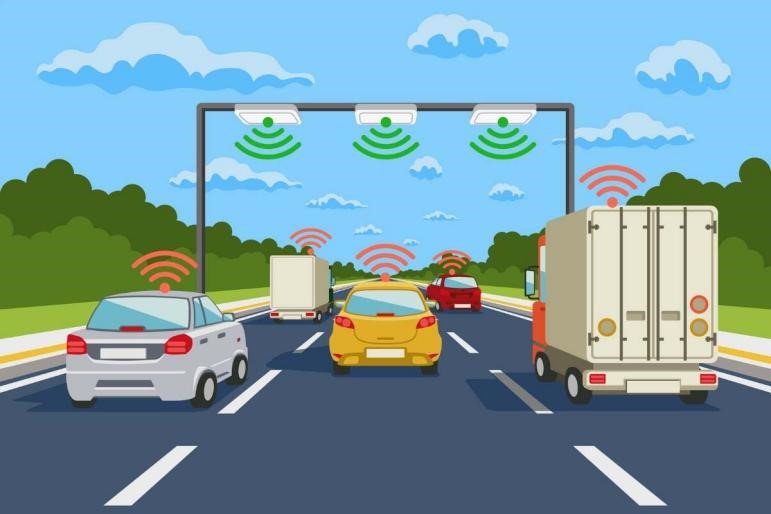
Against the backdrop of accelerated urbanization and a surge in motor vehicle ownership, traditional traffic management models face pain points such as low efficiency and difficult control. Specialized tags developed by RFID tag manufacturers for traffic scenarios, such as RFID License Plate Tag and UHF windshield tags, have been deeply integrated into the entire chain of vehicle control, parking management, and public transportation scheduling.
RFID Tags Powering Smart Traffic Management Upgrade
The global logistics sector is undergoing a transformative shift as RFID logistic labels emerge as the cornerstone of modern supply chain management. At the recently concluded Global Logistics Expo 2025, leading technology providers showcased cutting-edge RFID solutions designed to enhance traceability, reduce operational costs, and meet stringent compliance requirements across industries such as retail, healthcare, and food logistics.
RFID Logistic Labels Revolutionize Supply Chain Efficiency

In the era of Industry 4.0,RFID labels have emerged as a cornerstone of intelligent supply chain management, asset tracking, and consumer engagement. These compact devices, embedded with microchips and antennas, enable wireless data transmission, offering unparalleled efficiency compared to traditional barcodes. From retail to healthcare, RFID labels are revolutionizing operations across diverse sectors.
RFID Fin Tag Revolutionizes Retail Inventory Management
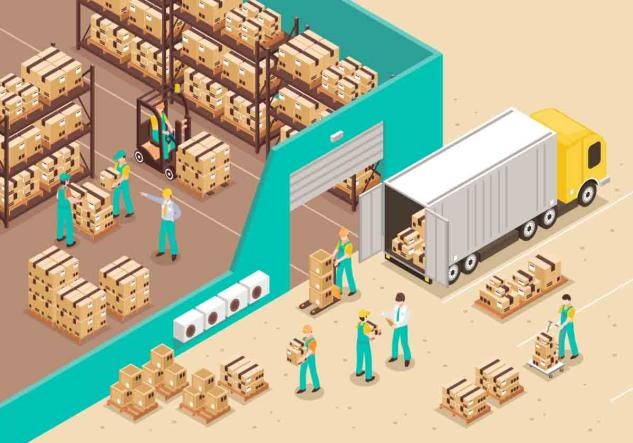
Relying on the advantages of batch identification of multiple tags and non-contact reading, RFID technology has realized the intelligent upgrading of the entire logistics link. Among them, the RFID UHF tags and RFID UHF tire tags developed by RFID tag manufacturers for logistics scenarios have solved the pain points of package management and transportation safety respectively, becoming a key support for smart logistics.
Application of RFID Tags in Express Logistics Industry