
RFID tag components
author: admin
2025-12-11
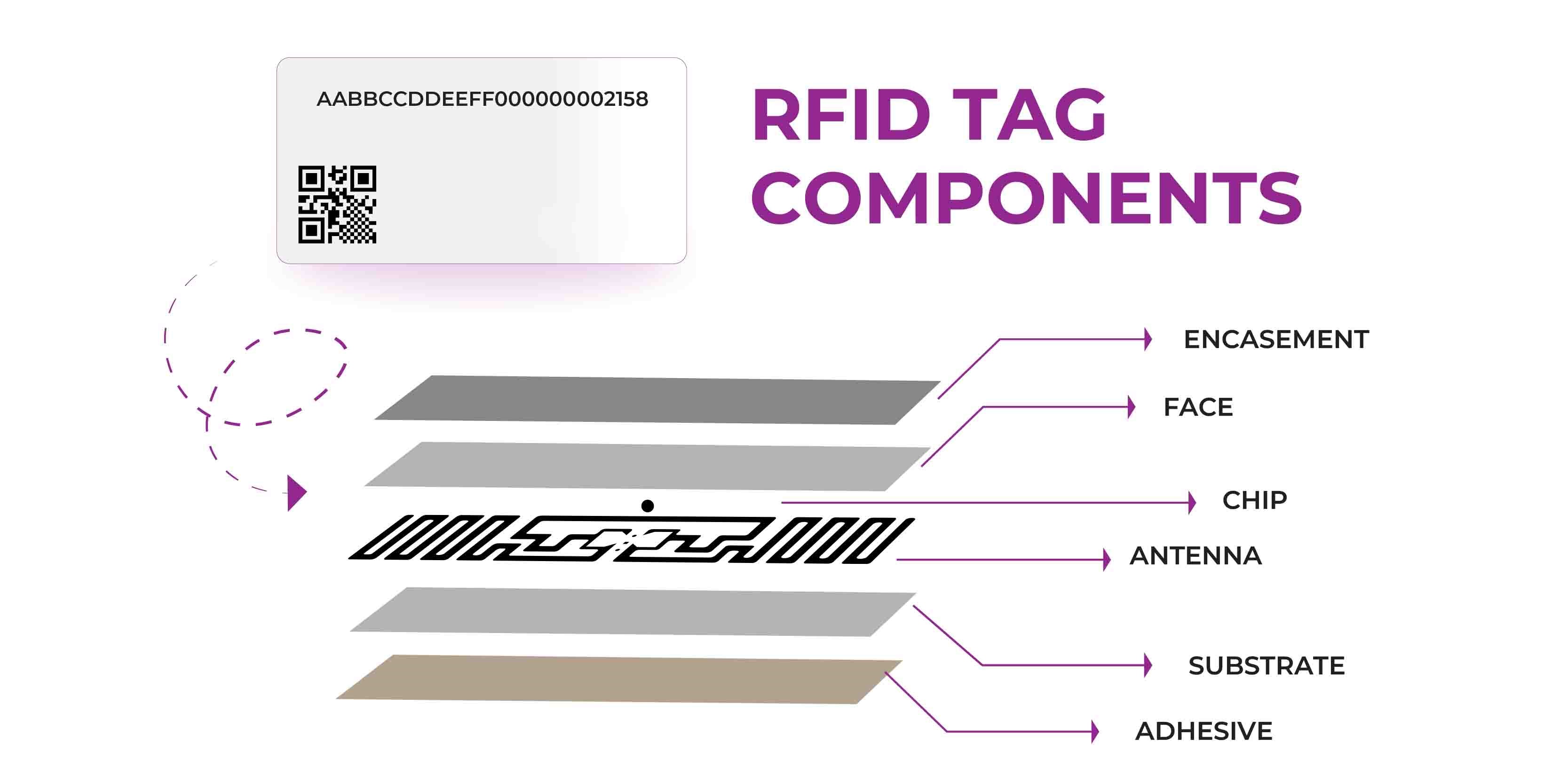
RFID tag components
The rapid evolution of RFID technology has transformed industries from logistics to healthcare, with its ability to enable seamless, contactless identification and tracking. At the heart of every uhf RFID system lies the RFID tag, a compact device composed of specialized components that determine its functionality, durability, and suitability for specific applications. This article delves into the three primary components of an RFID tag—chip, antenna, and substrate—and explores how their design and integration shape performance across diverse use cases.
1. The Chip (Integrated Circuit, IC): The Brain of the Tag
The RFID chip, often referred to as the integrated circuit (IC), is the smallest yet most critical component. Typically the size of a pinhead, it stores the tag’s unique identifier (UID) and other data, such as product details, manufacturing dates, or access permissions. Modern UHF RFID chips, commonly used in supply chain management, feature multiple memory banks:
• EPC (Electronic Product Code): Stores the tag’s primary ID.
• TID (Tag Identifier): A permanent, factory-set serial number.
• User Memory: Customizable space for application-specific data.
• Reserved Memory: Used for security protocols like password protection.
• User Memory: Customizable space for application-specific data.
• Reserved Memory: Used for security protocols like password protection.
Advanced chips also incorporate encryption modules and error-checking algorithms to enhance data security and reliability. For instance, semiconductor giants like NXP and Impinj design chips with low power consumption and high sensitivity, enabling tags to operate in challenging environments, such as metal-rich settings or long-range applications.
2. The Antenna: The Communication Gateway
The antenna is the largest component of an RFID tag and serves as its communication interface with readers. Its design varies based on the tag’s frequency band:
• UHF Tags (860–960 MHz): Use dipole antennas, which are straight or folded metal strips optimized for long-range reading (up to 10 meters or more).
• HF (13.56 MHz) and LF (125 kHz) Tags: Employ coil-shaped antennas for shorter-range, inductive coupling-based communication, common in access control and payment systems.
The antenna’s material—typically copper, aluminum, or conductive ink—and geometry directly impact read range and orientation sensitivity. For example, a tag attached to a metal surface may require a specialized antenna design, such as a spacer-backed or etched PCB antenna, to avoid signal interference. Innovations like flexible printed antennas on PET substrates are also gaining traction, enabling tags to conform to curved surfaces, such as bottles or wearable devices.
• HF (13.56 MHz) and LF (125 kHz) Tags: Employ coil-shaped antennas for shorter-range, inductive coupling-based communication, common in access control and payment systems.
The antenna’s material—typically copper, aluminum, or conductive ink—and geometry directly impact read range and orientation sensitivity. For example, a tag attached to a metal surface may require a specialized antenna design, such as a spacer-backed or etched PCB antenna, to avoid signal interference. Innovations like flexible printed antennas on PET substrates are also gaining traction, enabling tags to conform to curved surfaces, such as bottles or wearable devices.
3. The Substrate: The Structural Foundation
The substrate acts as the physical carrier for the chip and antenna, binding them into a cohesive unit. Its material selection influences the tag’s flexibility, durability, and cost:
• Flexible Substrates: Made from PVC, PET, or paper, these are ideal for disposable tags (e.g., retail labels) or applications requiring bending, such as laundry management.
• Rigid Substrates: Constructed from PCB (Printed Circuit Board) or ceramic materials, these offer enhanced robustness for industrial assets like tools or machinery.
• Rigid Substrates: Constructed from PCB (Printed Circuit Board) or ceramic materials, these offer enhanced robustness for industrial assets like tools or machinery.
The substrate’s thickness and dielectric properties also affect antenna performance. For instance, a thicker substrate may improve read range for UHF tags by reducing signal loss, while a thinner, flexible substrate suits high-volume, low-cost deployments.
Encapsulation: The Protective Layer
While not a core component, encapsulation—the outer casing or coating—plays a vital role in safeguarding the tag from environmental stressors like moisture, chemicals, or physical impact. Encapsulation materials range from epoxy resins for industrial tags to biodegradable polymers for eco-friendly applications. Some tags, such as those embedded in concrete or metal, are hermetically sealed to ensure longevity in extreme conditions.
Conclusion
The RFID tag’s components—chip, antenna, and substrate—work in harmony to deliver a technology that is both powerful and adaptable. By understanding their roles and interactions, businesses can select or design tags that optimize performance, cost, and environmental resilience, unlocking new efficiencies in an increasingly connected world.
RFID Tags Empower Industry 4.0 Smart Manufacturing Efficiency Revolution
RFID Clothing Tags Application in School Uniforms
Related Article

Against the backdrop of accelerated urbanization and a surge in motor vehicle ownership, traditional traffic management models face pain points such as low efficiency and difficult control. Specialized tags developed by RFID tag manufacturers for traffic scenarios, such as RFID License Plate Tag and UHF windshield tags, have been deeply integrated into the entire chain of vehicle control, parking management, and public transportation scheduling.
RFID Tags Powering Smart Traffic Management Upgrade
The global logistics sector is undergoing a transformative shift as RFID logistic labels emerge as the cornerstone of modern supply chain management. At the recently concluded Global Logistics Expo 2025, leading technology providers showcased cutting-edge RFID solutions designed to enhance traceability, reduce operational costs, and meet stringent compliance requirements across industries such as retail, healthcare, and food logistics.
RFID Logistic Labels Revolutionize Supply Chain Efficiency

In the era of Industry 4.0,RFID labels have emerged as a cornerstone of intelligent supply chain management, asset tracking, and consumer engagement. These compact devices, embedded with microchips and antennas, enable wireless data transmission, offering unparalleled efficiency compared to traditional barcodes. From retail to healthcare, RFID labels are revolutionizing operations across diverse sectors.
RFID Fin Tag Revolutionizes Retail Inventory Management

Relying on the advantages of batch identification of multiple tags and non-contact reading, RFID technology has realized the intelligent upgrading of the entire logistics link. Among them, the RFID UHF tags and RFID UHF tire tags developed by RFID tag manufacturers for logistics scenarios have solved the pain points of package management and transportation safety respectively, becoming a key support for smart logistics.
Application of RFID Tags in Express Logistics Industry