
UHF RFID Tags Achieve Breakthrough in Read Range Design
author: admin
2025-11-03
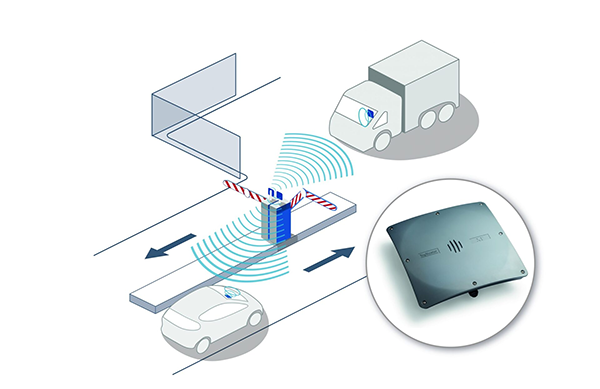
UHF RFID Tags Achieve Breakthrough in Read Range Design
In a significant advancement for radio frequency identification technology, engineers have successfully designed UHF RFID tags capable of achieving read ranges of up to 38 meters under optimal conditions. This breakthrough positions UHF RFID as a leading solution for industries requiring long-distance, high-volume tag identification, such as supply chain management, logistics, and asset tracking.
Technical Foundations: UHF RFID’s Core Advantages
UHF RFID operates within the 860–960 MHz frequency band, leveraging far-field radiative coupling (backscatter technology) to transmit data. Unlike LF or HF RFID, which are limited to read ranges of 10 cm to 1 meter, UHF tags utilize smaller antennas and higher data transfer rates, enabling simultaneous reading of hundreds of tags per second. The latest Gen 2 protocol further enhances performance, supporting anti-collision algorithms for efficient multi-tag identification.
Key factors influencing UHF RFID read ranges include:
Antenna Design: Optimized dipole or patch antennas reduce signal loss, extending detection distances.
Reader Power: Increased transmit power (up to 2W EIRP in regions like the U.S.) boosts signal penetration.
Environmental Adaptability: While UHF signals are susceptible to interference from metals and liquids, specialized anti-metal and liquid-resistant tags now mitigate these challenges.
Industry Applications Driving Demand
The expanded read range of UHF RFID is revolutionizing several sectors:
Logistics & Warehousing: Pallet-level tracking at distances exceeding 20 meters streamlines inventory management.
Retail: Real-time stock visibility in large warehouses reduces manual checks.
Healthcare: Asset tracking of medical equipment across hospital floors enhances operational efficiency.
Automotive: Toll collection and vehicle tracking systems leverage UHF’s long-range capabilities.
Healthcare: Asset tracking of medical equipment across hospital floors enhances operational efficiency.
Automotive: Toll collection and vehicle tracking systems leverage UHF’s long-range capabilities.
A 2025 case study by Avery Dennison demonstrated a UHF tag achieving a 20-meter read range in a controlled environment, while field tests in open warehouses reported consistent detection up to 15 meters. For comparison, HF RFID systems typically max out at 1 meter, making UHF the preferred choice for scalable deployments.
Challenges and Innovations
Despite its advantages, UHF RFID faces challenges:
Signal Attenuation: Metals and liquids absorb UHF waves, requiring shielded tags or alternative positioning.
Regulatory Variations: Frequency allocations differ by region (e.g., 868 MHz in Europe, 915 MHz in the U.S.), necessitating region-specific designs.
To address these issues, manufacturers are developing hybrid tags that combine UHF with NFC or LF technologies for multi-environment compatibility. Additionally, advanced signal processing algorithms now compensate for multipath interference, stabilizing read ranges in complex settings.
Industry analysts project the global UHF RFID market to grow at a 12% CAGR through 2030, with supply chain and retail sectors contributing over 50% of demand.
Conclusion: A New Era for RFID
The expanded read range of UHF RFID tags represents a paradigm shift in automatic identification technology. By balancing performance, cost, and environmental resilience, UHF RFID is poised to dominate applications requiring speed, accuracy, and scalability. As innovations continue, the line between passive and active tag capabilities may blur, further expanding the technology’s frontier.
RFID Tags Closing the Traceability Loop for Materials and Process Operations in Production
RFID Tags Empowering the Intelligent Transformation of Spare Parts Inventory Management
Related Article
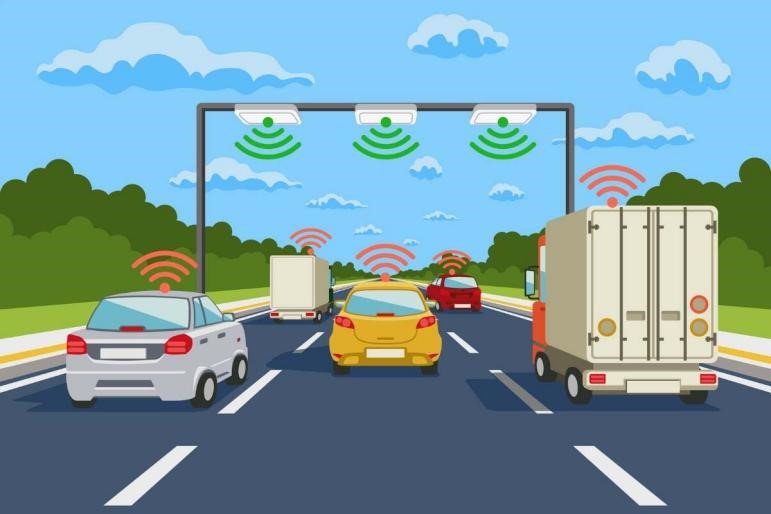
Against the backdrop of accelerated urbanization and a surge in motor vehicle ownership, traditional traffic management models face pain points such as low efficiency and difficult control. Specialized tags developed by RFID tag manufacturers for traffic scenarios, such as RFID License Plate Tag and UHF windshield tags, have been deeply integrated into the entire chain of vehicle control, parking management, and public transportation scheduling.
RFID Tags Powering Smart Traffic Management Upgrade
The global logistics sector is undergoing a transformative shift as RFID logistic labels emerge as the cornerstone of modern supply chain management. At the recently concluded Global Logistics Expo 2025, leading technology providers showcased cutting-edge RFID solutions designed to enhance traceability, reduce operational costs, and meet stringent compliance requirements across industries such as retail, healthcare, and food logistics.
RFID Logistic Labels Revolutionize Supply Chain Efficiency

In the era of Industry 4.0,RFID labels have emerged as a cornerstone of intelligent supply chain management, asset tracking, and consumer engagement. These compact devices, embedded with microchips and antennas, enable wireless data transmission, offering unparalleled efficiency compared to traditional barcodes. From retail to healthcare, RFID labels are revolutionizing operations across diverse sectors.
RFID Fin Tag Revolutionizes Retail Inventory Management

Relying on the advantages of batch identification of multiple tags and non-contact reading, RFID technology has realized the intelligent upgrading of the entire logistics link. Among them, the RFID UHF tags and RFID UHF tire tags developed by RFID tag manufacturers for logistics scenarios have solved the pain points of package management and transportation safety respectively, becoming a key support for smart logistics.
Application of RFID Tags in Express Logistics Industry